
Fox thought it was going to be a disaster. Alan Ladd Jr. greenlit it anyway. Filming in Tunisia nearly collapsed the entire production. Lucas had a breakdown in the editing room. Nobody believed it would work — until it became the highest-grossing film in history and changed everything.
▶ Watch the 1977 Theatrical TrailerBefore the Film Existed_
George Lucas wanted to make Flash Gordon. He couldn't get the rights. What came out of that failure was a treatment called "The Star Wars," written across two years of research, mythology, and frustration. American Graffiti had made him enough money and credibility to demand creative control. Fox agreed because nobody thought it would matter.
Flash Gordon and Joseph Campbell
Lucas spent two years researching myth, fairy tale, and pulp science fiction before writing a single scene. He drew heavily on Joseph Campbell's The Hero with a Thousand Faces — the monomyth structure that underlies folklore across cultures. He read Carlos Castaneda. He studied Japanese cinema, particularly Akira Kurosawa's The Hidden Fortress, which directly influenced the structure of two droids guiding a story through history-changing events. The source material was global and ancient. The setting was space opera.
Fox Thought They Won
Lucas pitched to Universal first. They passed. Fox's Alan Ladd Jr. said yes, partly on instinct. Lucas accepted a below-market directing fee in exchange for full ownership of sequel, character, and merchandise rights. Fox executives considered it a reasonable concession on a film they expected to fail quietly. When the toys alone generated $100 million in the first two years, the full weight of the error became apparent. Lucas structured this deal deliberately. Nobody on the Fox side understood what they were agreeing to.
The Man Who Made Fox Believe
Lucas hired Ralph McQuarrie, a former NASA illustrator, to paint five key scenes before the script was finalized. The paintings showed Vader's helmet, C-3PO and R2-D2 on a desert planet, a dogfight in space, and the Death Star. Lucas brought them to Fox. Executives who had read the script with confusion and alarm looked at McQuarrie's paintings and understood the film for the first time. McQuarrie's visual imagination is the reason this film got made.
Four Drafts, Twelve Rewrites
The first draft was 200 pages of impenetrable world-building. The second introduced the Jedi. The third gave us Luke Starkiller. The fourth is close to what was filmed. Lucas rewrote it over three years while simultaneously developing American Graffiti and running Lucasfilm. Brian De Palma and William Huyck both gave notes. Gloria Katz co-wrote portions. By the time it went to production, so many hands had touched it that the WGA credited Lucas alone as a compromise.
Making A New Hope_
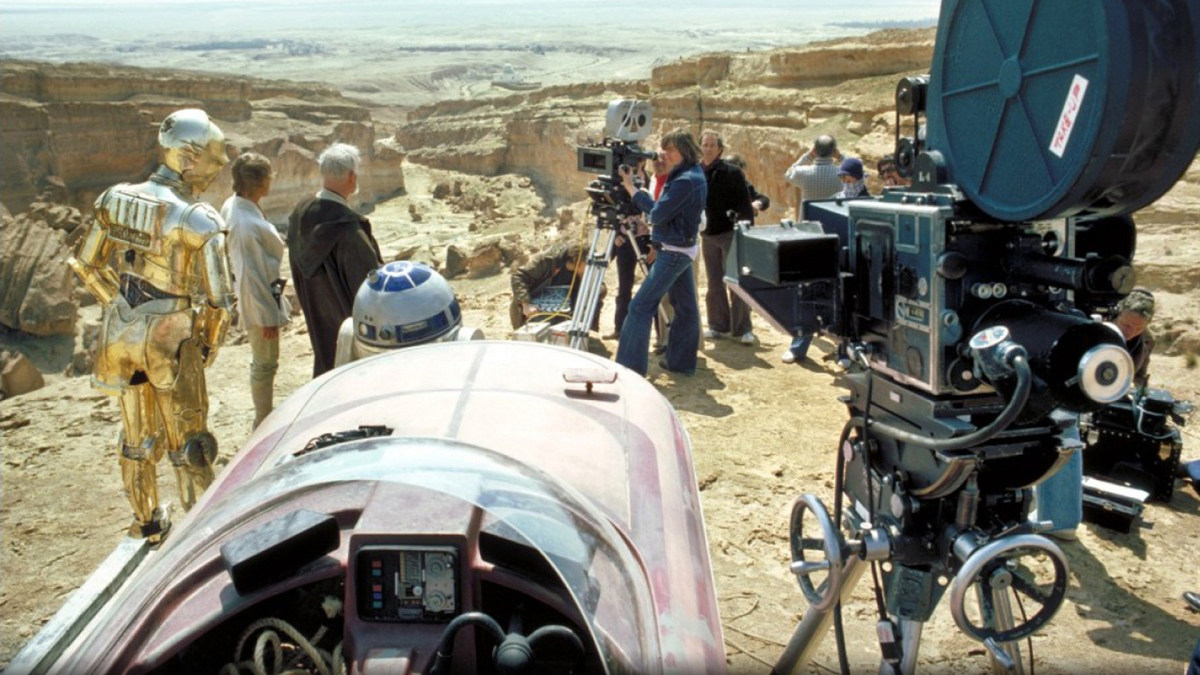
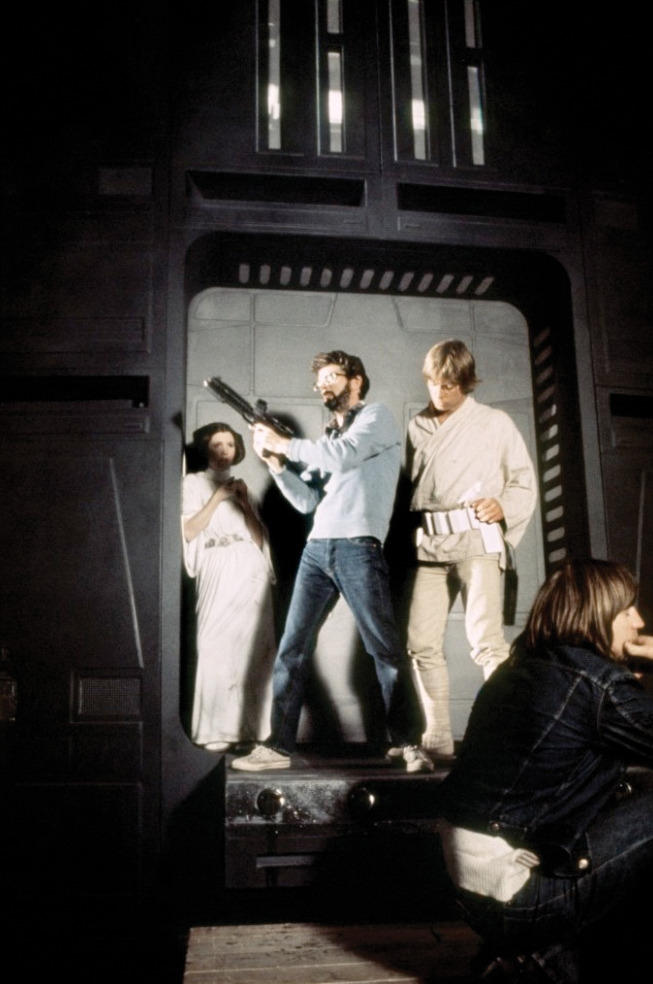
Principal photography began March 22, 1976 in Djerba and Matmata, Tunisia. Equipment failed. Actors got heatstroke. Sandstorms buried cameras. R2-D2's remote control malfunctioned. C-3PO's suit couldn't be put on or removed without help, and Anthony Daniels had to be carried between scenes. Lucas flew home to San Francisco after Tunisia believing the film was going to destroy him.
What he could not have known was that John Jympson's rough cut was going to confirm every fear. The editing was disastrous. Lucas and editor Richard Chew, brought in midway, re-cut the entire film. John Williams hadn't scored it yet. The special effects didn't exist. On the morning of the first press screening, it was barely finished.
Tatooine Almost Killed the Production
The shoot in Tunisia went catastrophically wrong from day one. The morning after the crew arrived in the desert, it rained — the first significant rain in decades. Equipment sank. Sandstorms buried cameras. R2-D2's remote control failed every time the temperature exceeded 90°F, which was almost always. The Jawas' sandcrawler broke down. Mark Hamill got sunburn so severe he couldn't shoot. Anthony Daniels, inside the C-3PO suit, passed out from heat. Lucas ate antacids by the handful and barely spoke to anyone. After six days in Tunisia, he was already behind schedule.
The Stage That Wasn't Big Enough
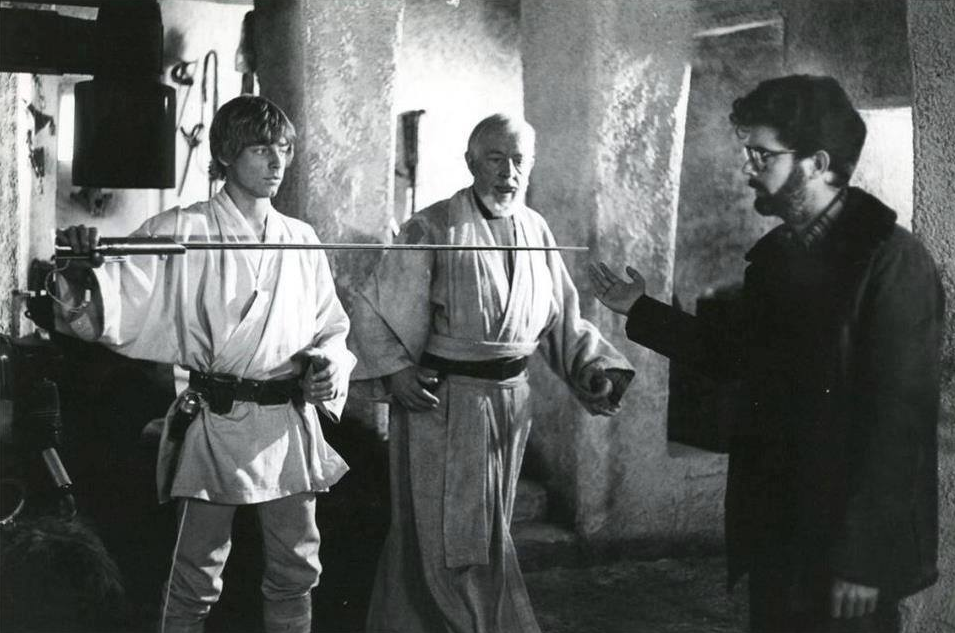
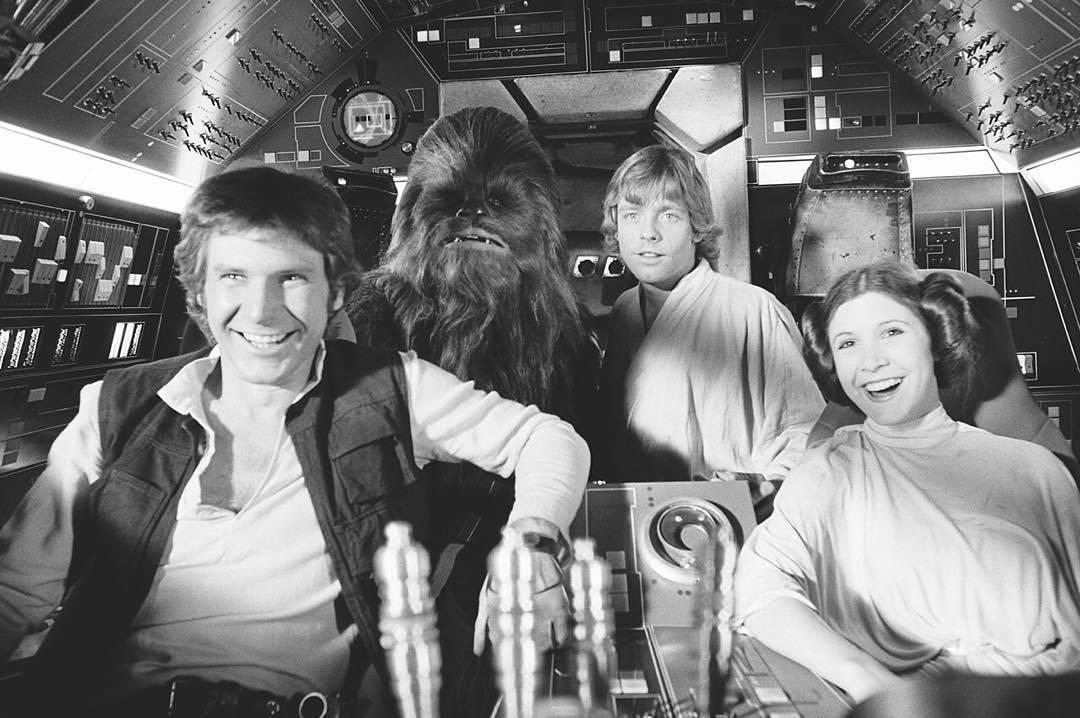
The Millennium Falcon set at Elstree was the largest indoor set ever built in Britain at the time. It had to be. Lucas had imagined a ship that felt lived-in and industrial — dirty, asymmetrical, full of character. The production design team, led by John Barry, had to solve problems nobody had ever faced before. The Death Star interiors were shot on overlapping sets, redressed between takes. Lucas, not a comfortable director of actors, relied heavily on Alec Guinness and Harrison Ford to pull performances from one another.
The Director Who Almost Didn't Finish
By the end of principal photography, Lucas was in poor health. He had hypertension and exhaustion. He had not been sleeping. The crew at Elstree, used to relaxed productions, found his minimalist communication style ("faster and more intense" was his most common note) alienating. Several senior crew members were openly hostile. Lucas completed his director's cut in a state of near-collapse. When John Jympson's assembly cut came back and was unwatchable, he had a breakdown in the parking lot of the editing facility. He hired new editors. They started over.
The Company Built to Make This One Film
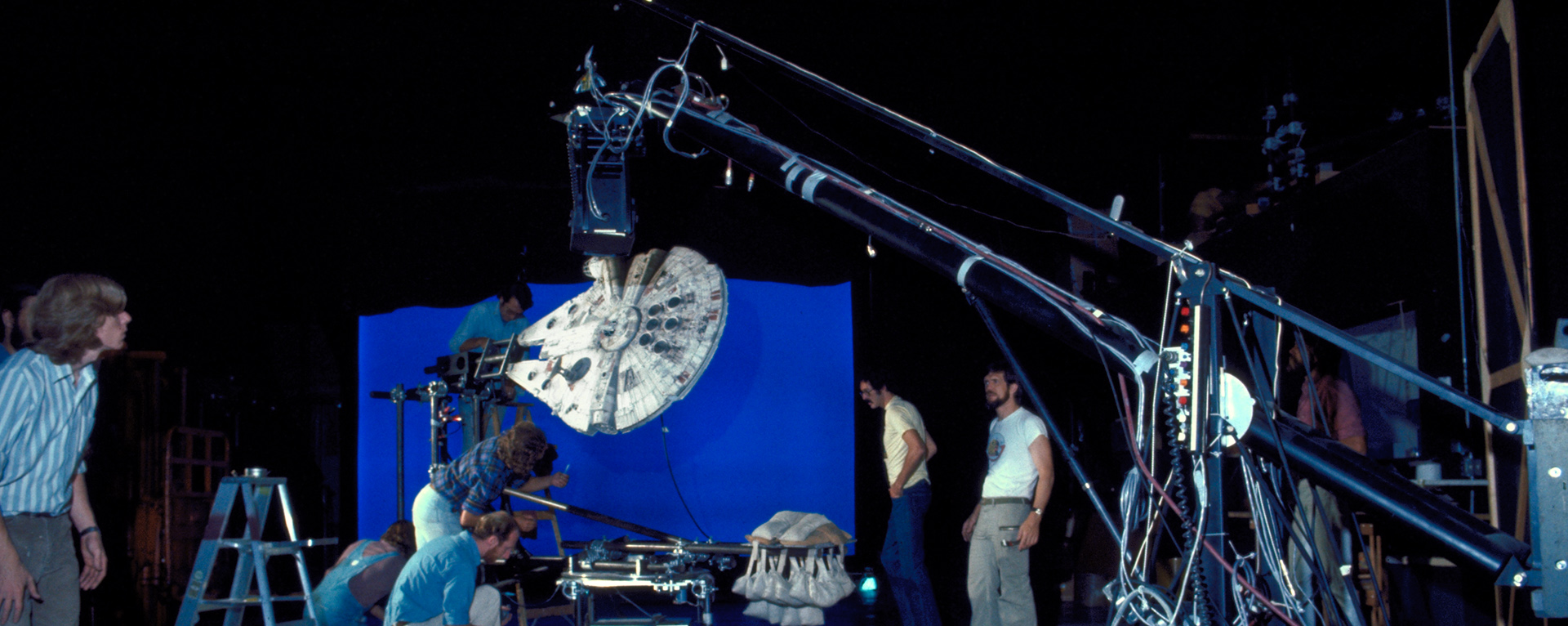
Industrial Light & Magic was founded in a warehouse in Van Nuys, California specifically to create the visual effects for Star Wars. Fox had no existing facility capable of producing what Lucas needed. John Dykstra built a motion-control camera system — the Dykstraflex — that allowed the camera to move around stationary models on a repeatable programmed path, enabling seamless compositing of multiple passes. Every technique ILM invented for this film — motion control, layered matte photography, practical miniatures — was standard practice for the next twenty years.
Tatooine · The Death Star · Yavin IV_
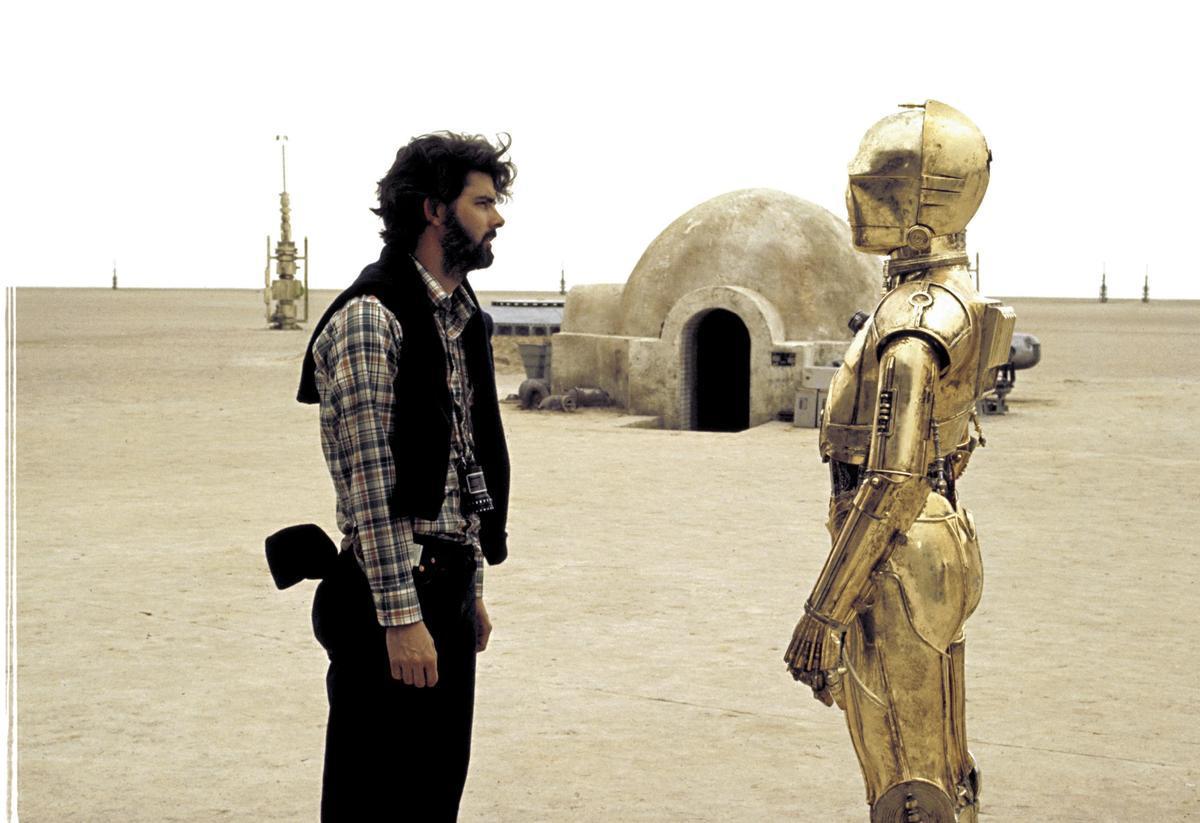
A New Hope takes place in three radically different visual environments. The dust and poverty of Tatooine, the industrial scale of the Death Star, the lush jungle canopy of Yavin IV. Each was designed by Ralph McQuarrie from paintings before a set was built. John Barry translated them into physical space. Norman Reynolds finished what Barry began.
The Edge of the Galaxy
Tatooine was built from two locations: the real desert landscape of Matmata and Djerba in Tunisia, and interior sets at Elstree. The Lars homestead exterior is a real troglodyte dwelling in Matmata still visible today. The Cantina was built at Elstree on a tight schedule — many of the alien costumes were repurposed from a BBC production. The intent was a kind of interplanetary port town: broken-down, multiracial, and dangerous. A frontier in the oldest sense.
The Machine That Should Feel Infinite
The Death Star corridors were deliberately designed to feel industrial and institutional — white, angular, inhuman. John Barry used forced perspective and overlapping redressed sets to suggest an impossibly large structure on a limited budget. The trench run was achieved by filming a physical model of the trench at ILM, running the camera along it at high speed, then using the Dykstraflex to add the X-wings as separate passes. The explosion was a miniature inside a studio, composited with layers of matte painting.
The Rebel Base in the Jungle
The Rebel hangar and medal ceremony exterior sequences were shot at Tikal, the ancient Mayan ruin complex in Guatemala. The jungle canopy and the stone pyramid temple visible in the establishing shot are real. The Rebel hangar interiors were built at Elstree at enormous scale. The X-wing models used in the climactic trench run were 66 inches long and built with the same obsessive accuracy that would define ILM's work for the next two decades.
Built in Five Days. Iconic Forever.
The Mos Eisley Cantina sequence was shot over five days. The alien costumes were assembled from whatever the makeup department had available, recycled from other productions or built hurriedly on set. The band — Figrin D'an and the Modal Nodes — performed "Mad About Me" (known colloquially as the Cantina Band) live in costume. John Williams later scored it for the film. The scene was intended to establish that Star Wars existed in a universe that predated the story, populated by creatures with their own histories and agendas.
What's Actually in It_
A New Hope is a film with no subtext. The good guys are good. The bad guys are bad. The mentor dies. The hero finds his power. This is a feature, not a bug. Lucas was deliberately writing a myth — a story so structurally primal that any audience anywhere could locate themselves in it. The sophistication is architectural. The simplicity is the point.
The Star Destroyer That Changed Cinema
The opening sequence — a small blockade runner pursued by an Imperial Star Destroyer that keeps coming, and coming, and keeps coming — communicated scale that had never been put on screen before. The Star Destroyer model was 91 inches long. The camera tracked beneath it on a motion-control rig. The hull detail was the result of kit-bashing hundreds of model parts. Audiences in the first screenings reportedly gasped and then went quiet. In 1977, nothing had looked like this.
The Character Who Wasn't Supposed to Be That
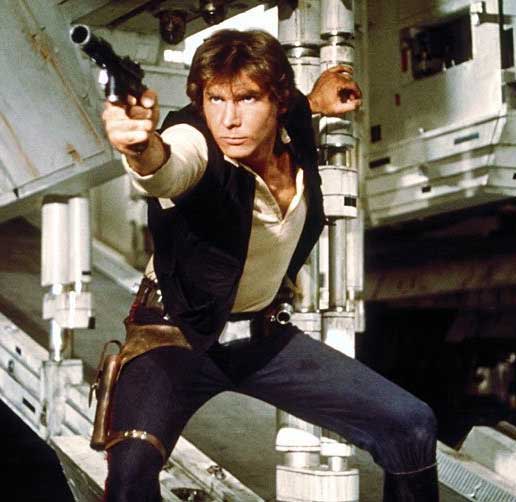
Ford was not seriously considered for the role during casting. He was installing a door at Francis Ford Coppola's office when Lucas walked in and asked him to feed lines to other actors auditioning for Han Solo. He read so well that Lucas asked him back. The character as written was a cynical mercenary with no arc. Ford took him further — the smirk, the slouch, the improvised attitude. Han Solo's personality as audiences understand it is largely Harrison Ford's invention, filtered through what Lucas let into the final cut.
The Actor Who Hated the Script
Guinness agreed to play Obi-Wan after a meeting with Lucas, citing curiosity about the project and a modest fee plus 2% of the gross. He reportedly told his friends it was "fairy tale rubbish" and struggled with the dialogue throughout shooting. He improvised several scenes and pushed for his character's death, arguing that a living Obi-Wan would have to be explained in subsequent films. His decision to ask for the death gave the film its most significant emotional beat. His 2% of the gross made him one of the highest-paid actors in history.
The Shot That Explains the Whole Film
Luke Skywalker stands on a ridge in Tunisia and watches two suns set. Nothing in this film is more important than this moment. It is a completely silent image — no dialogue, no action, just John Williams's theme swelling beneath it. The shot communicates everything the film is about: a young person standing at the edge of something vast, knowing they belong somewhere else, not yet knowing how to get there. It was not in the original screenplay. Lucas added it in post. It is the film's center of gravity.
The Climax Nobody Thought Would Work
The Death Star trench run was assembled from over 360 separate optical effects shots — the most in any film made to that point. The editors had no footage for weeks; ILM was delivering scenes two days before the premiere. Lucas edited the trench run using footage from World War II aerial combat films to show editors the rhythm he wanted. The finished sequence, with Williams's score building to the final torpedo shot, is one of the most precisely engineered pieces of film editing in mainstream cinema history.
Three People Made One Villain
Darth Vader exists as an entity because three people contributed to him simultaneously. McQuarrie designed the helmet and armor from scratch — the mask was based on a Japanese kabuto and a World War II gas mask. David Prowse performed the body on set. James Earl Jones recorded the voice in post-production and, at his own request, went uncredited. The combination of Prowse's physical menace and Jones's voice created something Hollywood had not previously produced: a villain who read as purely, categorically powerful from his first frame.
SHOT.
FIRST.
Twelve Parsecs
and No Illusions
I've got a bad feeling about this.
Kid, I've flown from one side of this galaxy to the other. I've seen a lot of strange stuff, but I've never seen anything to make me believe there's one all-powerful force controlling everything. There's no mystical energy field that controls my destiny.
Hokey religions and ancient weapons are no match for a good blaster at your side, kid. Never tell me the odds.
I thought it was going to be a small picture. It turned out to be something else entirely.
— Alan Ladd Jr. · President, 20th Century Fox · 1977
John Williams and the Main Title_
Lucas wanted a classical orchestral score in an era of synthesizers. Williams delivered one of the most fully realized film scores in the history of cinema. He invented the lightsaber sound. He invented the sound of hyperspace. He gave each major character their own leitmotif. He recorded the entire score at Abbey Road with the London Symphony Orchestra in 12 sessions over three weeks.
The First Seven Notes
Williams drew on the brass fanfare tradition of Golden Age Hollywood — Korngold, Steiner, Herrmann — to write a theme of near-impossible boldness. The opening five notes of the Main Title are a perfect fourth followed by a fifth, a progression so instantly recognizable it functions as a single word. Williams designed the theme to convey heroism and possibility simultaneously, specifically the feeling of standing at a threshold before the adventure has started. It was the first note audiences heard before a single image appeared.
The Sounds That Don't Exist
Ben Burtt, a film student hired by Lucas, created every major sonic identity in A New Hope from scratch. The lightsaber hum is a combination of an old TV set's idle frequency and a film projector motor. The blaster sound is a guy wire hit with a hammer. R2-D2 speaks in a mix of baby sounds and synthesizer tones that Burtt manipulated for weeks. The TIE Fighter scream is an elephant's call combined with a car on wet pavement, sped up. No film before Star Wars treated sound design as a creative discipline of equal weight to visual effects.
6 Wins Including a Special Award for ILM
Star Wars won 6 Academy Awards at the 1978 ceremony: Film Editing, Art Direction, Costume Design, Sound, Visual Effects, and Original Score. The Academy of Motion Picture Arts and Sciences created a special achievement award specifically for the visual effects team because the existing categories didn't adequately describe what ILM had accomplished. Lucas did not win for directing. Annie Hall won Best Picture. These facts are noted in every piece of cultural criticism about the year the blockbuster era began.
What 1977 Actually Looked Like_
Star Wars opened on a Wednesday in 32 theaters. Grauman's Chinese Theatre had lines wrapping the block by 8 AM. By the end of the first weekend it had made $1.5 million per theater — a number the industry had no framework to understand. By the time it expanded to 1,750 theaters in July, Fox had realized something had happened that had no precedent in the history of the studio system.
32 Theaters. Lines Before Dawn.
Fox initially resisted a wide release, scheduling the film in only 32 theaters. Theater owners who refused to play Star Wars in favor of other summer titles would later regret that decision. The theaters that did have it reported lines forming hours before opening. Contemporary accounts describe audiences watching it multiple times in a single day, a behavior that had no precedent. Fox expanded to 360 theaters by the second week, then to 1,750 by July. The expansion rate outpaced anything the studio had infrastructure to manage.
Kenner's Early Bird Certificate
Kenner Products had the Star Wars toy license but couldn't manufacture product fast enough for Christmas 1977. Their solution was the Early Bird Certificate Package: a box containing a certificate promising four action figures to be mailed to the buyer in early 1978. Parents bought empty boxes for their children. The figures — Luke, Leia, R2-D2, and Chewbacca — were mailed out in January. It was an act of brand desperation that became a collector's artifact. $100 million in toy sales followed in 1977 and 1978 combined.
Divided Reviews. Undivided Audiences.
Pauline Kael called it "an epic without irony." Vincent Canby of the New York Times found it "silly." Roger Ebert gave it four stars and wrote that it restored his faith in the movies. The critical reception was positive overall but cautious — reviewers sensed something culturally significant was happening without being able to name it precisely. What they all agreed on was that audiences were responding in a way that had not been seen since Jaws two years earlier, and that Jaws had been an anomaly too.
The Film Lucas Changed Three Times
In 1997, Lucas released a Special Edition with digital alterations: Jabba the Hutt inserted into a deleted scene, CGI crowds at Mos Eisley, and — most controversially — Greedo firing before Han in the cantina. The 2004 DVD added further changes. The 2011 Blu-ray added more. The original theatrical cut has never been officially released on any modern home format. Fans have created restoration projects from laserdisc masters. Lucas has repeatedly said the original cut is not the film he intended and that the Special Edition is the definitive version. This remains, in certain corners, a matter of active debate.
The People Who Made It_
Ten people whose contributions to A New Hope cannot be overstated.
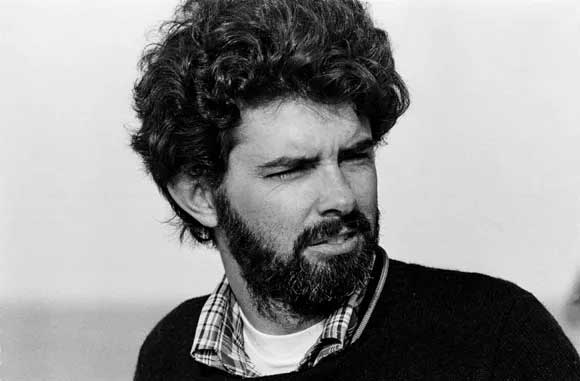
Wrote four drafts over three years and directed under conditions that nearly broke him. Structured a deal with Fox that gave him the merchandise rights. Has not directed a feature film since Revenge of the Sith.
Wikipedia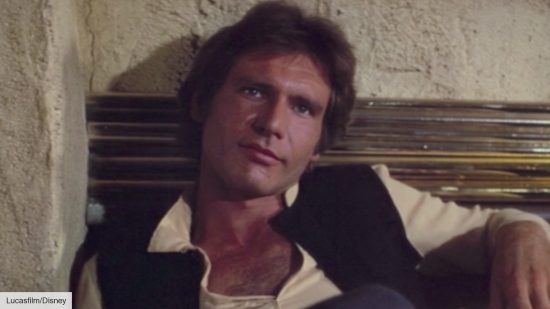
Was not supposed to get the role — was reading lines for other actors when Lucas realized he was looking at Han Solo. Built the character from attitude and improvisation. Was a carpenter before this film.
Wikipedia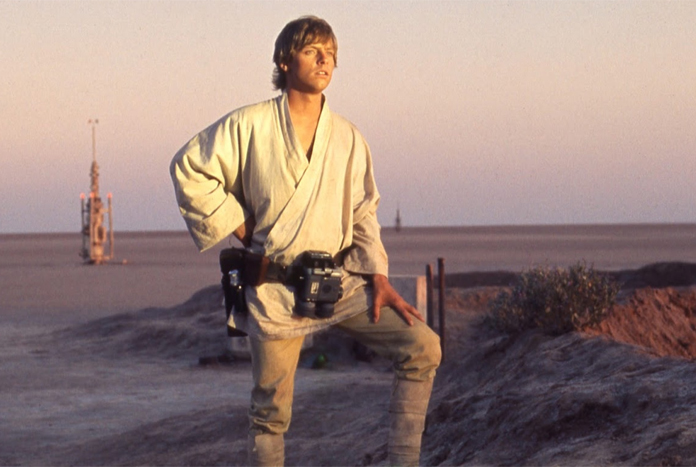
Carried the emotional arc of the film as an unknown. Played sincerity against Ford's cynicism and Guinness's wisdom without being diminished. Has spent nearly five decades as one of the most thoughtful interpreters of Star Wars.
Wikipedia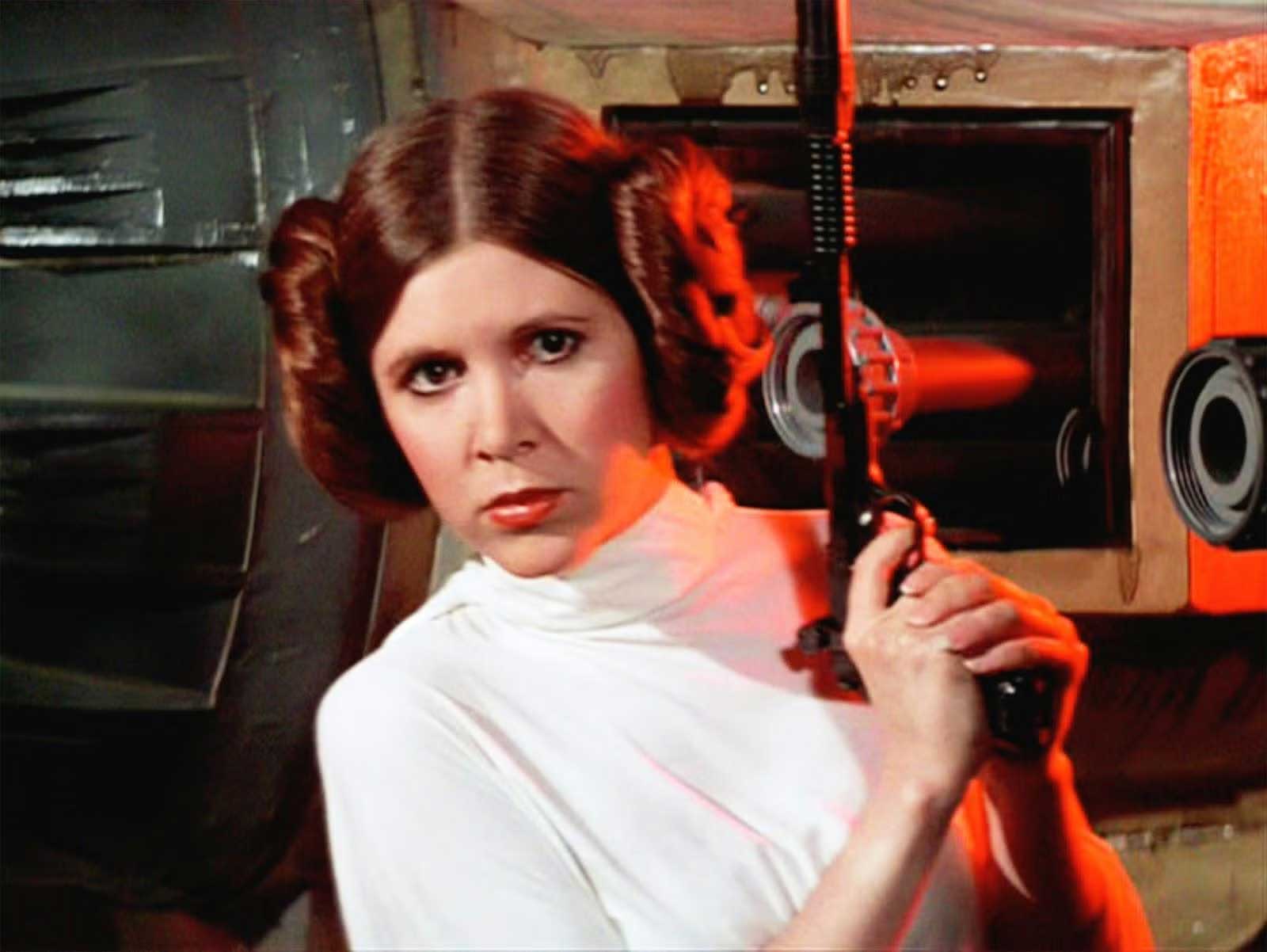
Was 19 during production and made Leia the most competent person in every room. The character was written as a catalyst for the male leads. Fisher made her the film's moral center.
Wikipedia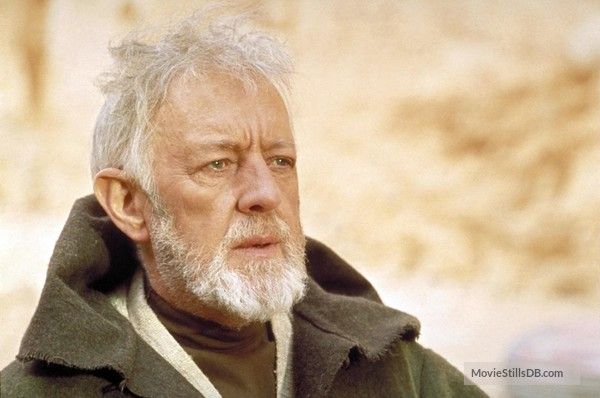
Hated the dialogue and improvised key scenes. Asked to be killed off to limit his obligations. His 2% of the gross earned more than any studio contract he had signed. Made the film work completely.
Wikipedia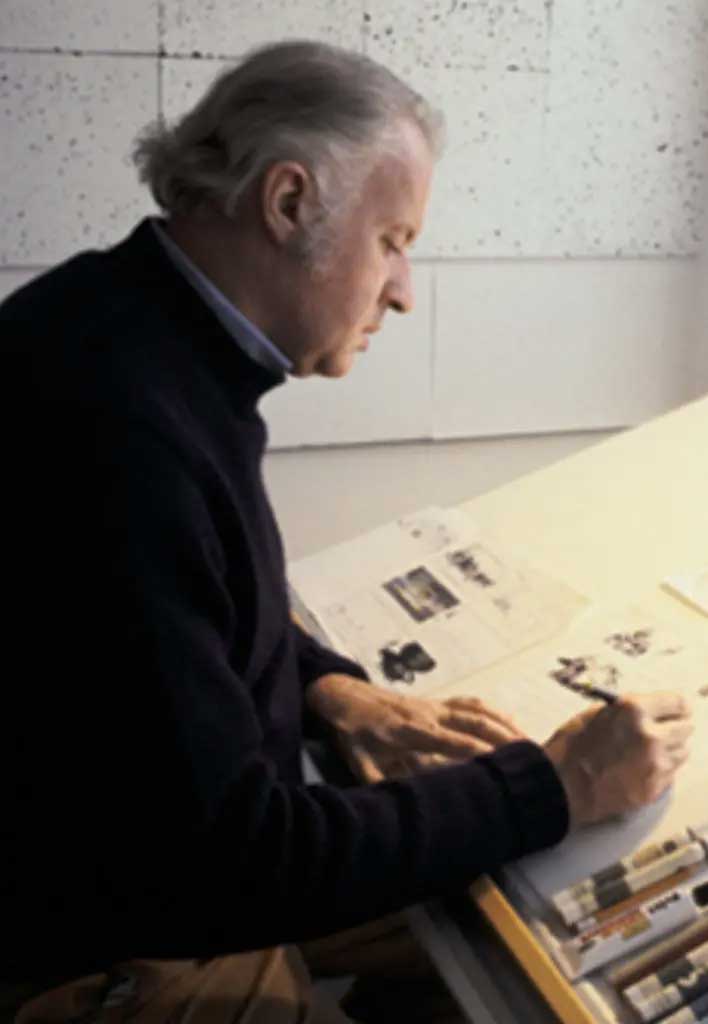
Painted the visual language of Star Wars before a set was built. His five original paintings are the reason Fox greenlit the film. Vader's helmet, C-3PO's gold, the Tatooine landscape — all McQuarrie first.
Wikipedia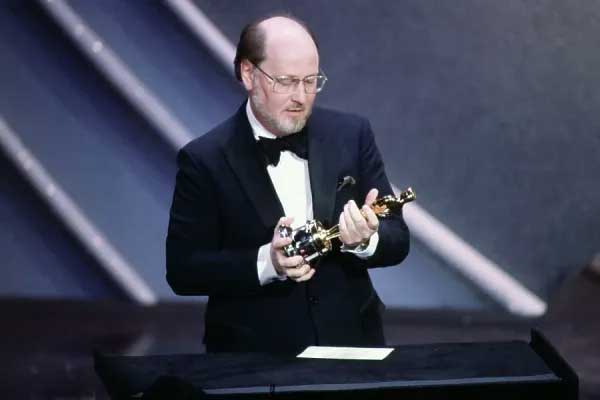
Composed what may be the most recognizable film score in history. Won the Academy Award. Wrote the Main Title, the Force Theme, Leia's Theme, the Cantina Band, and the Death Star motif for the same film.
Wikipedia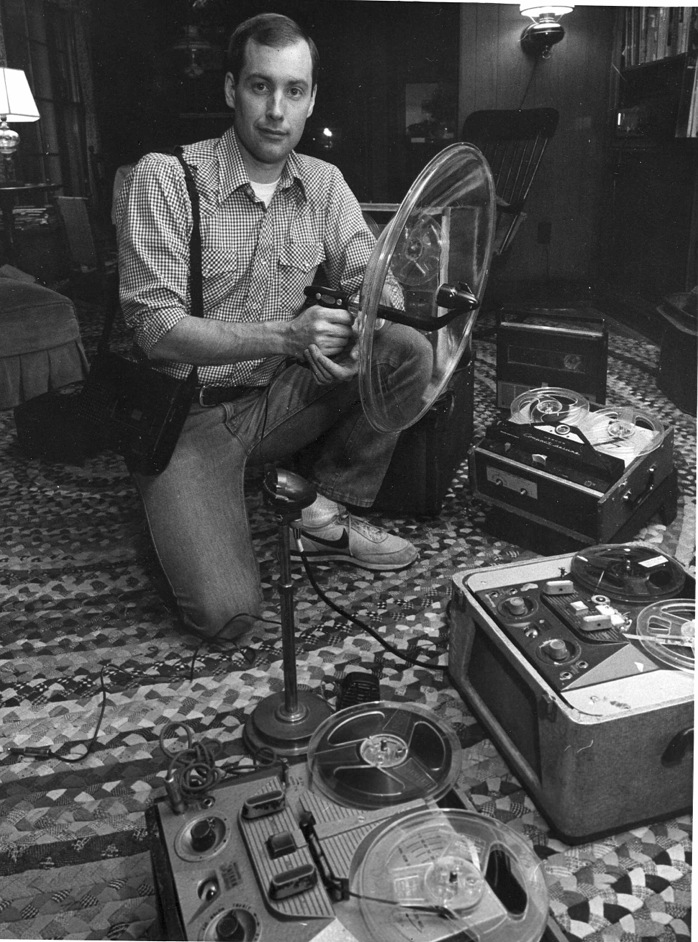
Invented the sonic identity of Star Wars from analog recordings of found sounds. The lightsaber, R2-D2, the blasters, TIE Fighter scream — none existed before Burtt created them. Won a Special Achievement Academy Award.
Wikipedia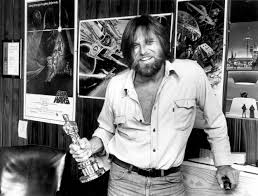
Built the Dykstraflex motion-control camera system in a warehouse and used it to produce over 360 optical composites. ILM, which he helped found, became the dominant visual effects company in the world.
Wikipedia
Said yes when nobody else would. Greenlit Star Wars on instinct when Fox readers found the script confusing. Fought internally to protect the film. The man who made the call that launched the franchise era of Hollywood.
WikipediaWhat It Changed_
A New Hope ended the New Hollywood era and began the franchise era. That statement sounds like criticism. It isn't. What Lucas created was a new commercial grammar for cinema — one built around world-building, franchise rights, and merchandise — that every studio in Hollywood immediately tried to replicate, with varying degrees of success.
Jaws Started It. Star Wars Finished It.
Jaws in 1975 introduced the wide summer release. Star Wars in 1977 proved it could work twice — and that the franchise, not the single film, was the commercial unit. Every major studio reorganized around tentpole event releases within three years. The New Hollywood directors who had prioritized personal vision — Coppola, Ashby, Bogdanovich — watched their budgets shrink as studios chased the next Star Wars. The blockbuster era is the world we still live in. It began with a desert, two suns, and a kid who wanted to leave.
The $4 Billion Decision Made in 1973
Lucas's insistence on retaining sequel and merchandise rights — dismissed by Fox as minor concessions — became the template for how creators engage with studios. When Disney purchased Lucasfilm for $4.05 billion in 2012, the asset being acquired was built entirely on the rights structure Lucas had insisted on forty years earlier. The deal Lucas made in 1973 is studied in business schools. The creative lesson — own your IP — is now a cliché because of how completely he proved it worked.
The Company That Changed Visual Effects
Industrial Light & Magic, founded to make one film, became the dominant visual effects company in Hollywood for the next twenty years. ILM invented digital compositing, digital character animation, and motion capture — technologies that define modern filmmaking. The Terminator. Indiana Jones. Jurassic Park. Schindler's List. Forrest Gump. The Matrix. Every significant visual effects breakthrough from 1977 to 2000 either originated at ILM or was developed in direct response to what ILM had done.
The Hero's Journey Made Mainstream
Lucas built A New Hope on Joseph Campbell's monomyth framework — the hero called from ordinary life, the mentor's sacrifice, the threshold crossing, the return with knowledge. This structure, which Campbell identified across thousands of years of folklore, had never been deployed so explicitly in a Hollywood blockbuster. The result was a film that resonated across cultures and languages without translation. The Force is the mystical unknown by any other name. The Empire is authority by any other name. Luke is anyone who has ever wanted to be more than where they started.
Where We Left Off
The Death Star is destroyed. Han Solo has shown up when it mattered. Alderaan is gone. The Rebellion has won a battle, not a war. Darth Vader escaped in a TIE Fighter. The Emperor is out there. Luke Skywalker received a medal, learned he can do things he doesn't understand yet, and is standing next to the two people who will define the rest of his life. Nobody in that auditorium in 1977 knew any of that was coming.
That was always the point. Not the ending — the beginning.
The production, release, and cultural legacy of the 1977 film that ended New Hollywood and began the franchise era — from a Tunisia sandstorm to the highest-grossing film in history.