A (Brief)
History of
April Fools Day_
From Roman Hilaria to BBC spaghetti harvests — the complete history of humanity's greatest shared tradition of creative deception. How one day a year became the world's most democratic art form.

The Romans celebrated Hilaria at the end of March — a festival dedicated to Cybele in which citizens wore disguises, mocked fellow citizens, and were generally encouraged to be as ridiculous as possible. Emperors themselves were not exempt.
Iran's Sizdah Bedar, observed on the 13th day of the Persian new year, has included pranks and jokes for over 2,500 years. Many scholars argue this is the oldest continuous April-adjacent prank tradition in the world — predating any European equivalent.
Medieval Europe had its own inversion festivals — particularly the Feast of Fools, observed in early January, when the normal hierarchy was turned upside down. Lower clergy would dress as bishops, and the "Lord of Misrule" presided over deliberate chaos and irreverence.
Before the Gregorian calendar standardized January 1 as New Year's Day, many European cultures celebrated the new year on or around April 1. Those who hadn't yet received the news — or refused to change — were mocked as "April fools." This theory remains plausible, if unproven.
The fool doth think he is wise, but the wise man knows himself to be a fool.
— William Shakespeare, As You Like It, c. 1599

French poet Eloy d'Amerval makes one of the earliest literary references to poisson d'avril — "April fish" — in his work Le Livre de la Deablerie. The French tradition of attaching paper fish to people's backs remains alive today.
English antiquary John Aubrey writes of "Fooles holy day" on April 1 in his Remaines of Gentilisme and Judaisme — the first explicit British reference to the date as a day of pranks. The observation confirms the tradition was already well established.
In France, April Fools Day is called Poisson d'Avril — April Fish. Children stick paper fish on each other's backs and shout "Poisson d'Avril!" when discovered. Historians believe young fish were abundant and easily caught in April, making them symbols of gullibility.
Scotland celebrated a two-day April Fools tradition. The first day involved "hunting the gowk" — sending people on fool's errands with a letter reading "Dinna laugh, dinna smile. Hunt the gowk another mile." The second day, Taily Day, involved pranks attached to posteriors.
One of the most famous early April Fools pranks: Londoners were sent official-looking notices inviting them to see the "Annual Ceremony of Washing the White Lions" at the Tower of London. Crowds arrived. There were no lions. The prank was repeated multiple times over the following century.
The New York Sun published a six-part series claiming astronomer Sir John Herschel had discovered life on the moon — including bat-winged humanoids and blue unicorns. Though not April-specific, it demonstrated newspapers' power to deceive at mass scale and shaped the template for modern media hoaxes.

The telegraph enabled April Fools pranks to cross national borders for the first time. Fake news dispatches about fictional events in distant cities — earthquakes that hadn't happened, elections with impossible results — traveled at the speed of electricity. The infrastructure of modern hoaxing was complete.
As literacy spread and printing costs fell, April Fools jokes moved from local to national. Satirical pamphlets, penny papers, and eventually mass-circulation newspapers all developed traditions of April 1 hoaxes. The key lesson learned early: a good hoax needs a kernel of plausibility.
The first of April is the day we remember what we are the other 364 days of the year.
— Mark Twain, Pudd'nhead Wilson's Calendar, 1894
The Gazette printed a story claiming a massive gold deposit had been discovered nearby. Hundreds of residents left work and raced to the site before realizing it was April 1. The newspaper reported on the chaos it caused as a follow-up story. The template of "hoax, then coverage of the hoax" was born.
During both World Wars, April Fools pranks served a psychological function. Allied propaganda services deliberately planted false stories on April 1 — plausible enough to confuse the enemy, deniable as "jokes" if discovered. Humor as cover for deception became a wartime art form.

Orson Welles' radio broadcast adapting H.G. Wells's War of the Worlds wasn't an April Fools prank — it aired on October 30 — but it defined the cultural benchmark for "successful hoax." Every April 1 story since has been measured against how many people it genuinely fooled.
The first brand April Fools campaigns emerged in the 1930s and 40s. Companies found that plausible-but-absurd product announcements generated enormous press coverage and goodwill. A good joke cost almost nothing and earned more attention than any paid advertisement. The template that modern brands still use today was set.
The BBC's Panorama broadcast a three-minute segment on the "Swiss spaghetti harvest" — showing farmers pulling strands of spaghetti from trees. Hundreds of viewers called the BBC asking where to buy a spaghetti tree. The BBC's reported response: "Place a sprig of spaghetti in a tin of tomato sauce and hope for the best." The greatest April Fools prank ever executed.
Swedish national television aired a segment in which a "technical expert" explained that viewers could watch color television by stretching a nylon stocking over their black-and-white screen. The science was plausible-sounding. Thousands of Swedes tried it. Television had discovered it could fool an entire nation simultaneously.
The Guardian ran a seven-page special supplement about San Serriffe — a fictional island nation in the Indian Ocean named after typeface terms, with cities called Bodoni and Garamondo. The supplement was so detailed and well-researched that the Guardian's travel desk received hundreds of inquiries about booking holidays there.
The broadcast era taught a crucial lesson: people believe what they can see. The same implausible story that readers might question in print became instantly credible on television. A person physically picking spaghetti from a tree was harder to disbelieve than words describing it. Visual media raised the stakes and the craft of April Fools permanently.
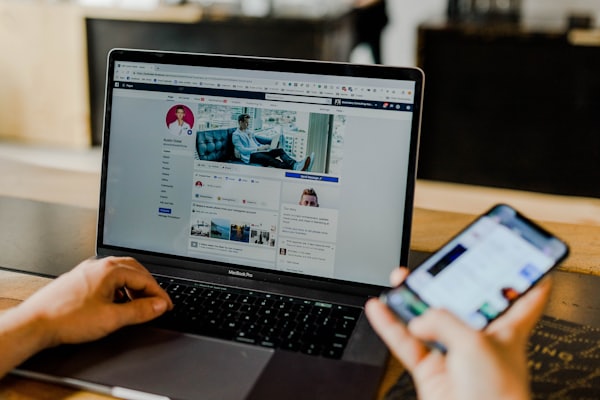
The early internet April Fools tradition began with software companies and tech publications. Usenet groups, then websites, discovered that fake product announcements and absurd technical specifications — presented with straight-faced documentation — were perfectly suited to a medium where context was impossible to verify.
Google launched Gmail on April 1, 2004 — offering 1GB of storage at a time when competitors offered 4MB. The announcement was so unbelievably good that most tech journalists initially assumed it was a joke. Google had understood something important: the best April Fools products are the ones that turn out to be real.
From 2008 to roughly 2015, corporate April Fools campaigns reached their cultural peak. Google alone would release a dozen fake products annually. ThinkGeek fake product listings would generate enough real orders to justify manufacturing them. The day had become the tech industry's most valuable PR opportunity — free advertising dressed as a joke.
The misinformation crisis of the 2010s changed April Fools' relationship with the media. Fake stories now circulate for days before debunking. Many publications suspended their April Fools traditions. The joke that was always a joke became indistinguishable from the lie that was always a lie. The day survived — but it got more complicated.
A sense of humor is part of the art of leadership, of getting along with people, of getting things done.
— Dwight D. Eisenhower

The first great American humorist, Browne's deadpan satirical letters inspired Mark Twain and established the tradition of print comedy as social critique. His persona "Artemus Ward" perfected the art of the plausible lie.

Welles' 1938 War of the Worlds broadcast set the modern benchmark for successful deception. Though not an April Fools prank, every subsequent hoax has been measured against how completely it fooled its audience — a standard Welles set in 60 minutes of radio.

The respected BBC journalist who narrated the 1957 spaghetti harvest documentary. Dimbleby's gravitas was the entire prank — no one expected the BBC's most trusted voice to be in on a joke. His straight-faced delivery is the reason it worked.

More than any other organization, Google redefined April Fools for the internet age. The Google April Fools tradition — beginning with the Mentalplex in 2000 — turned corporate hoaxes into an anticipated annual event and raised the bar for the entire tech industry.

The Amazing Randi spent his career exposing fraud and demonstrating how willing humans are to believe what they want to believe. His work provided the intellectual framework for understanding why April Fools pranks work — and why they eventually stopped working.

Stewart's Daily Show turned April Fools logic — fake news as truth-telling — into nightly television. By presenting fabricated news ironically, the show revealed more about reality than straight reporting. The line between the joke and the truth was the point.

The anonymous street artist extended April Fools logic into fine art — placing his own works inside major museums, selling originals for $60 on a New York street corner, and shredding a painting at auction moments after it sold for $1.4 million. Every action is a prank with a point.

The ultimate professional hoaxer, Skaggs has fooled major news organizations dozens of times since the 1960s — with fake press releases, manufactured controversies, and impossible products. His work is a sustained critique of journalism's gullibility disguised as comedy.

Abel's career spans six decades of successful hoaxes — he faked his own death and got an obituary in the New York Times, founded the Society for Indecency to Naked Animals, and ran multiple satirical political campaigns. He is the closest thing April Fools Day has to a patron saint.

The gadget retailer's annual April Fools product listings became so popular — and so frequently ordered by customers — that the company began manufacturing the "fake" products. The Tauntaun sleeping bag, Canned Unicorn Meat, and the Dharma Initiative alarm clock all began as April 1 jokes.
Generative AI means anyone can produce video, audio, and documentation of anything that never happened. The question stops being "could this be real?" and becomes "is there any reason to trust anything?" April Fools Day either becomes meaningless — or the most important day of the year.
As online irony becomes exhausting, cultural taste is shifting toward earnestness. The brands that win future April Fools cycles may be the ones that do something genuinely kind or useful — rather than something fake. The most surprising move left is the truth.
Corporate April Fools campaigns peaked around 2012–2015. As brand trust has become increasingly fragile, companies are increasingly cautious about anything that could be misread. The safest corporate April Fools move is to do nothing — which itself may signal something.
For 2,000 years, humans have designated one day to permission licensed mischief. That impulse — to disrupt the normal order for one day and laugh at the disruption — is not going anywhere. The format adapts. The tools change. The joke is eternal.
From Roman Hilaria to BBC spaghetti harvests — two thousand years of humanity's most democratic art form, the licensed lie.