Greetings from Coachella
A (Brief) History of Coachella

From a protest concert in the California desert to the world's most-photographed music festival. Every April, a polo field in Indio becomes the center of everything.

Indio, California · 1999 – Present

It started as a protest. It became a pilgrimage. And somewhere along the way, it became the most powerful brand in live music.

Coachella was never supposed to happen. It exists because a rock band got into a fight with a ticketing company, played a polo field in the middle of the desert, and accidentally showed a promoter what was possible. That promoter's name was Paul Tollett. The band was Pearl Jam. The year was 1996.

Three years later, Tollett turned that accidental proof-of-concept into the first Coachella Valley Music and Arts Festival. It lost money. Nobody cared. He came back the next year anyway.

What followed is one of the stranger stories in American culture — a small independent festival that survived bankruptcy, reinvented itself as the home of indie music, went mainstream, became a fashion event, accidentally invented a new kind of celebrity tourism, and along the way hosted some of the most discussed performances in modern music history.

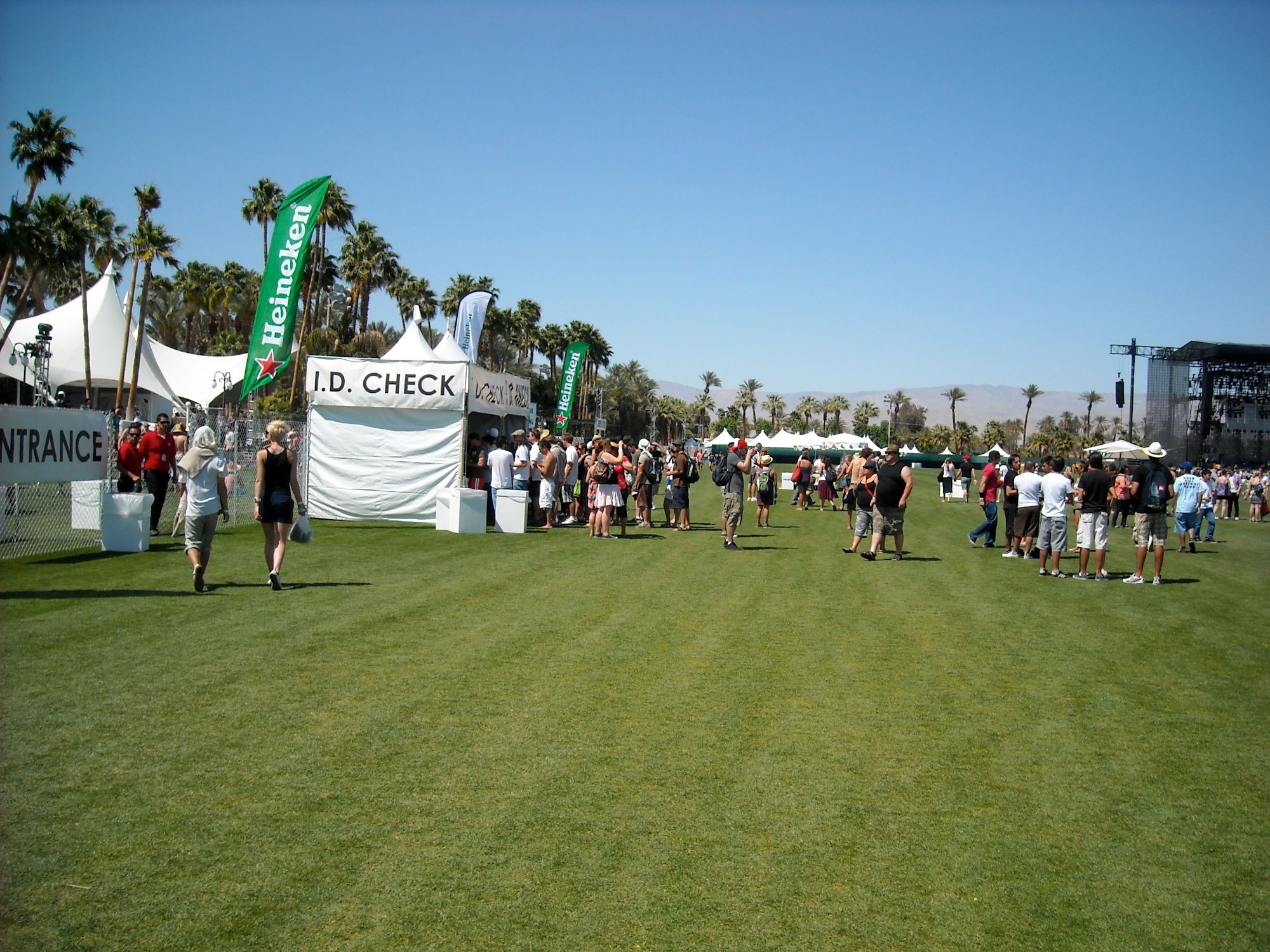
The Empire Polo Club grounds — palm trees, desert mountains, festival tents
The Empire Polo Club, Indio, California · The venue Pearl Jam accidentally discovered in 1996
Chapter One 1993 – 1999

Born from a Fight

In 1993, Pearl Jam did something almost no major band had attempted: they refused to play Ticketmaster venues. The antitrust complaint they filed with the Department of Justice went nowhere legally, but it forced them to tour independently — playing fairgrounds, polo fields, anywhere that would take them without the Ticketmaster surcharge.

1996

One of those venues was the Empire Polo Club in Indio, California. Twenty-five thousand people showed up to see Pearl Jam play a polo field in the desert, ninety miles east of Los Angeles. Paul Tollett, then running Goldenvoice, a Los Angeles concert promoter, was watching. He saw something the numbers didn't explain: people wanted to be there. The drive, the heat, the middle of nowhere — none of it was a deterrent. It was the point.

The desert wasn't the obstacle. It was the attraction.

— The lesson Pearl Jam taught without meaning to
1998 – 1999

Tollett negotiated a deal with the Empire Polo Club and began planning a multi-day, multi-stage festival. Nothing quite like it existed in America. Lollapalooza had stopped touring. Woodstock had ended in disaster. The moment felt open.

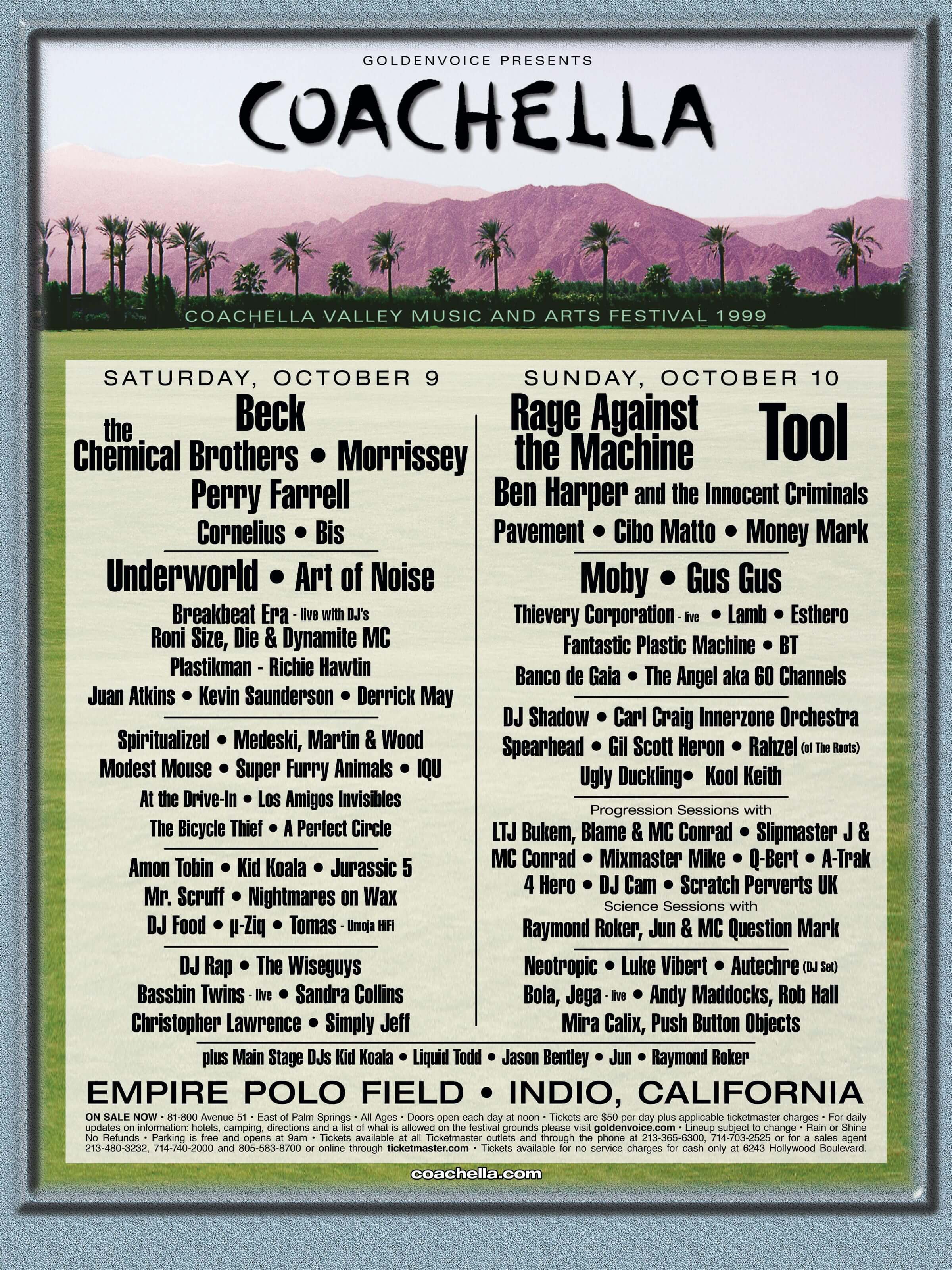
The first Coachella ran October 9–10, 1999. Beck, Tool, Rage Against the Machine, and Morrissey headlined. Tickets cost $50. Twenty-five thousand people attended. The festival lost money. Tollett didn't care — or at least, he acted like he didn't.

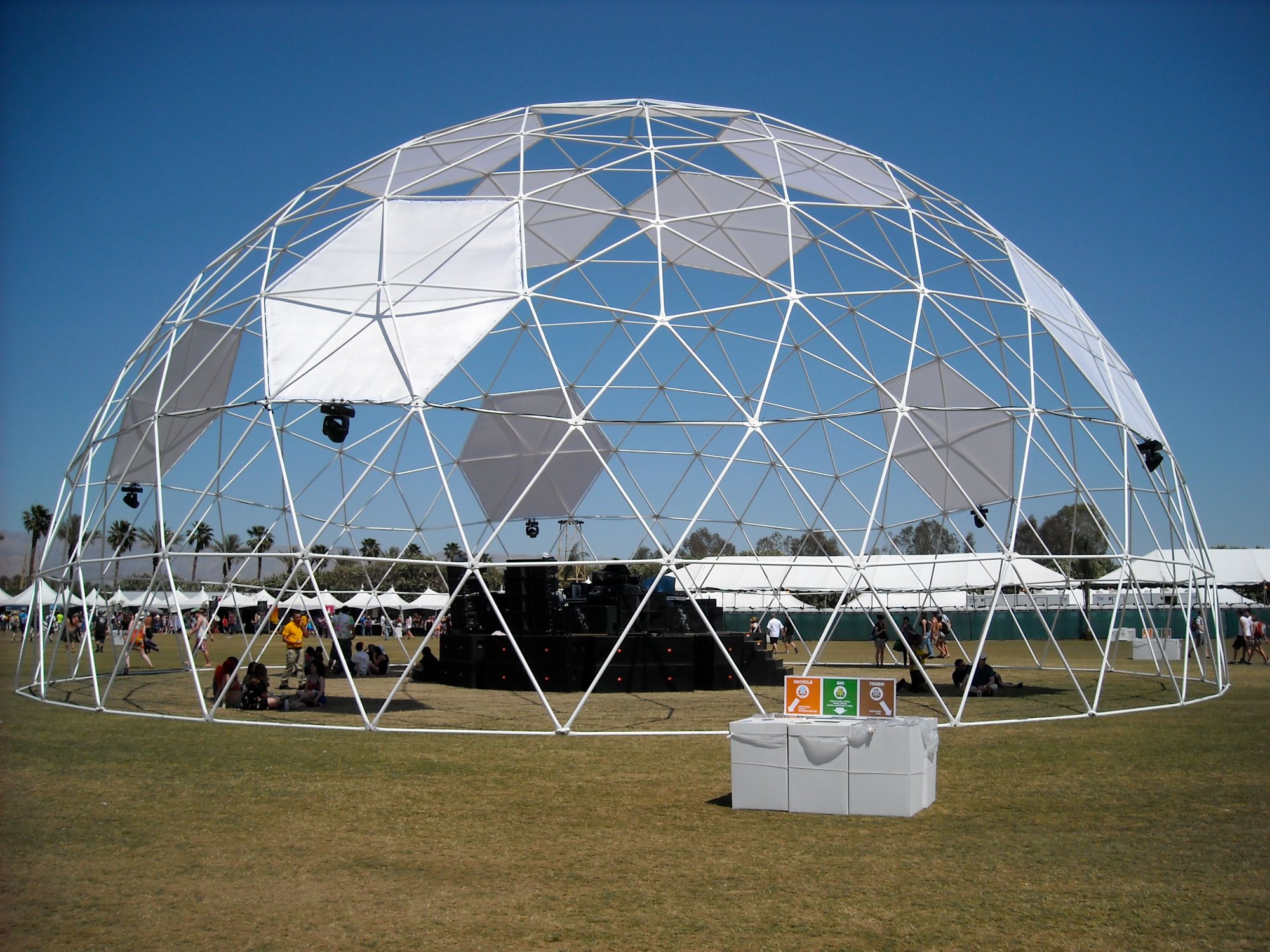
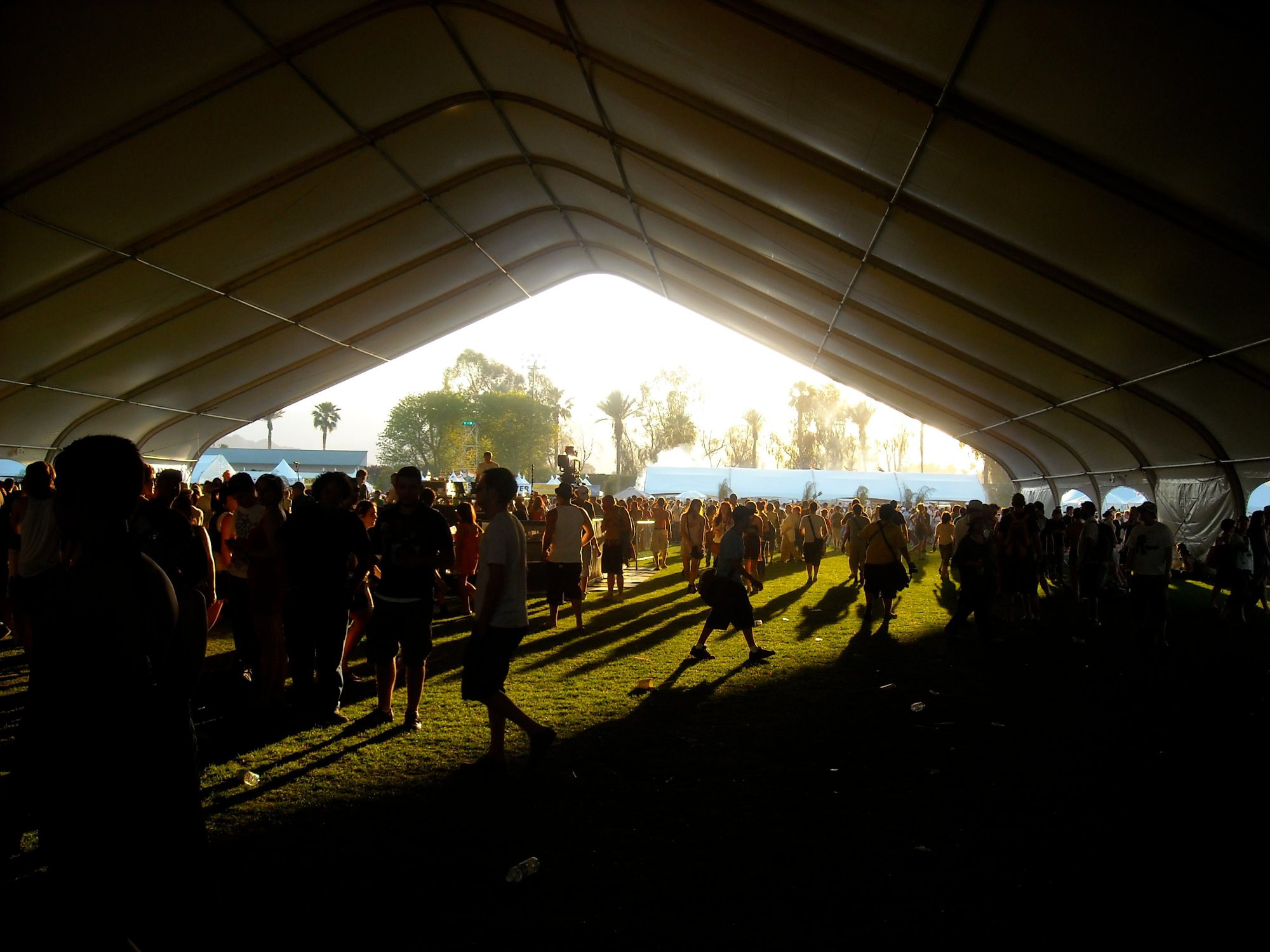
The geodesic dome stage — early Coachella's most distinctive structure Crowd inside a festival tent, golden afternoon light flooding through the opening
Chapter Two 2001 – 2007

The Indie Underground

Coachella skipped 2000 entirely — the losses from the first year were too significant, the financial picture too uncertain. When it came back in 2001, it was a one-day event, smaller, cheaper to produce. Jane's Addiction headlined. Daft Punk and The Chemical Brothers played. The electronic stage, which would eventually become the Sahara Tent — Coachella's beating heart — was born.

2002 – 2004

The festival expanded to two days. The White Stripes, Björk, Oasis. Then Radiohead in 2004 — a Sunday night performance widely considered one of the greatest festival sets ever played. People drove hours. They camped in the desert heat. They called it a pilgrimage without irony, and they were right. Coachella was becoming the place where you proved you cared.

Radiohead's Sunday set was the moment Coachella stopped being a concert and became a cathedral.

— The 2004 booking that changed everything
2006 – 2007

Daft Punk's 2006 Sahara Tent set — the one with the pyramid — is still talked about as a religious experience by people who were there. The year after, Rage Against the Machine reunited exclusively for Coachella. The festival sold out in hours. Something had shifted. Coachella was no longer a music festival you attended. It was a cultural event you either got into or didn't.

Coachella is where careers are made and legends are confirmed.

— Two decades of booking history
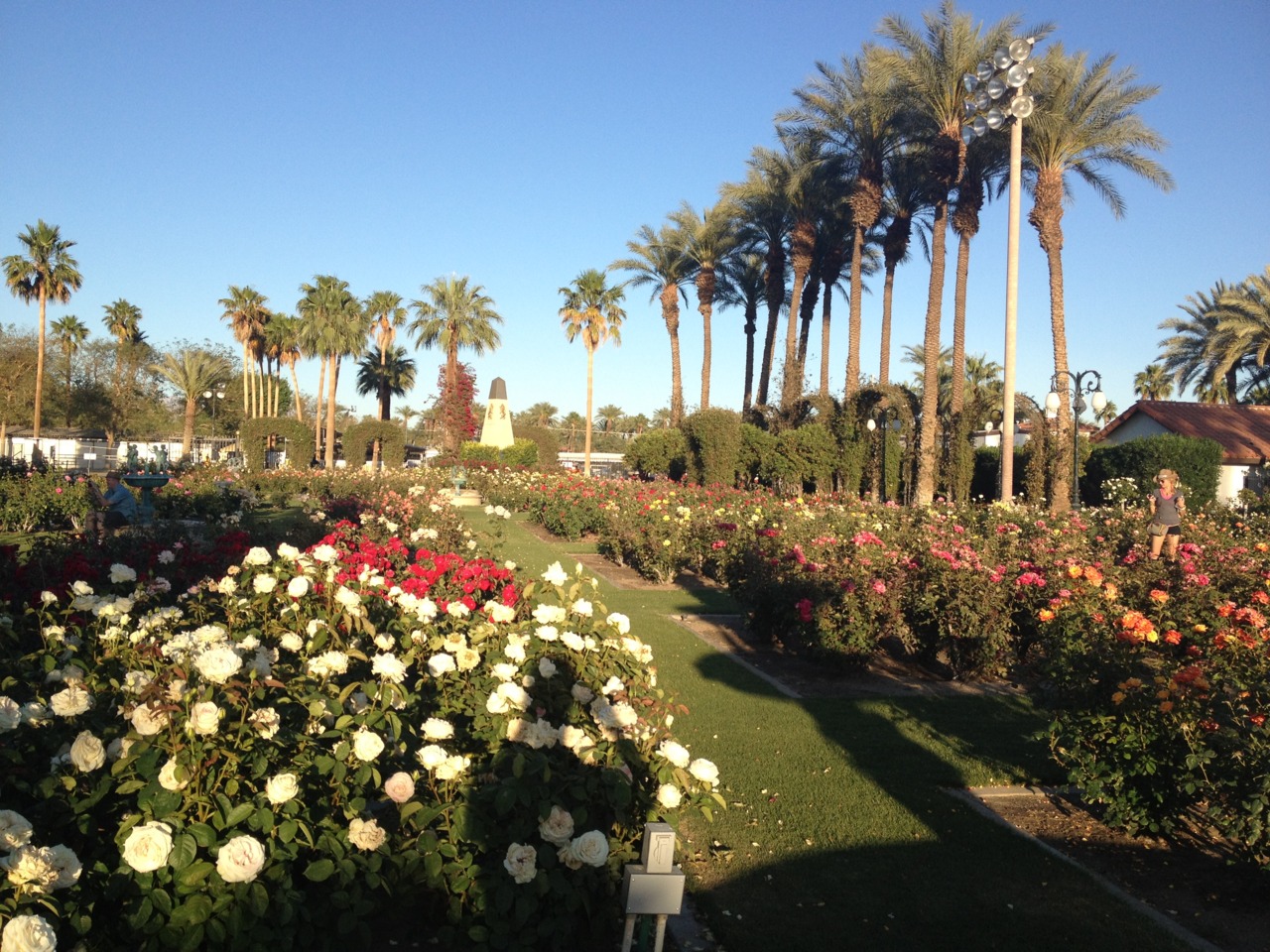
The VIP Rose Garden at Empire Polo Club — roses in full bloom, palm trees, desert sky White roses at the Empire Polo Club Rose Garden, palms and tents behind
(Left) The main stage. (Right) The Empire Polo Club Rose Garden — one of the festival's best-kept secrets, tucked between the stages
Chapter Three 2008 – 2014

Going Mainstream

Madonna headlined in 2008. For the indie faithful, this was a provocation. Coachella was supposed to be about Radiohead, about the Sahara Tent, about discovering something before it was famous. Madonna was not that. She was the opposite of that.

But Tollett understood something the purists didn't: Coachella's identity was never purely about genre. It was about spectacle, about the convergence of things that shouldn't converge. Madonna was as good a booking as any, if you thought about it that way. Most people, eventually, came around.

2012

The second weekend was introduced — two identical lineups, two weekends, double the capacity, double the revenue. Almost overnight, Coachella became the highest-grossing music festival in North America. The economics changed everything. The booking philosophy followed.

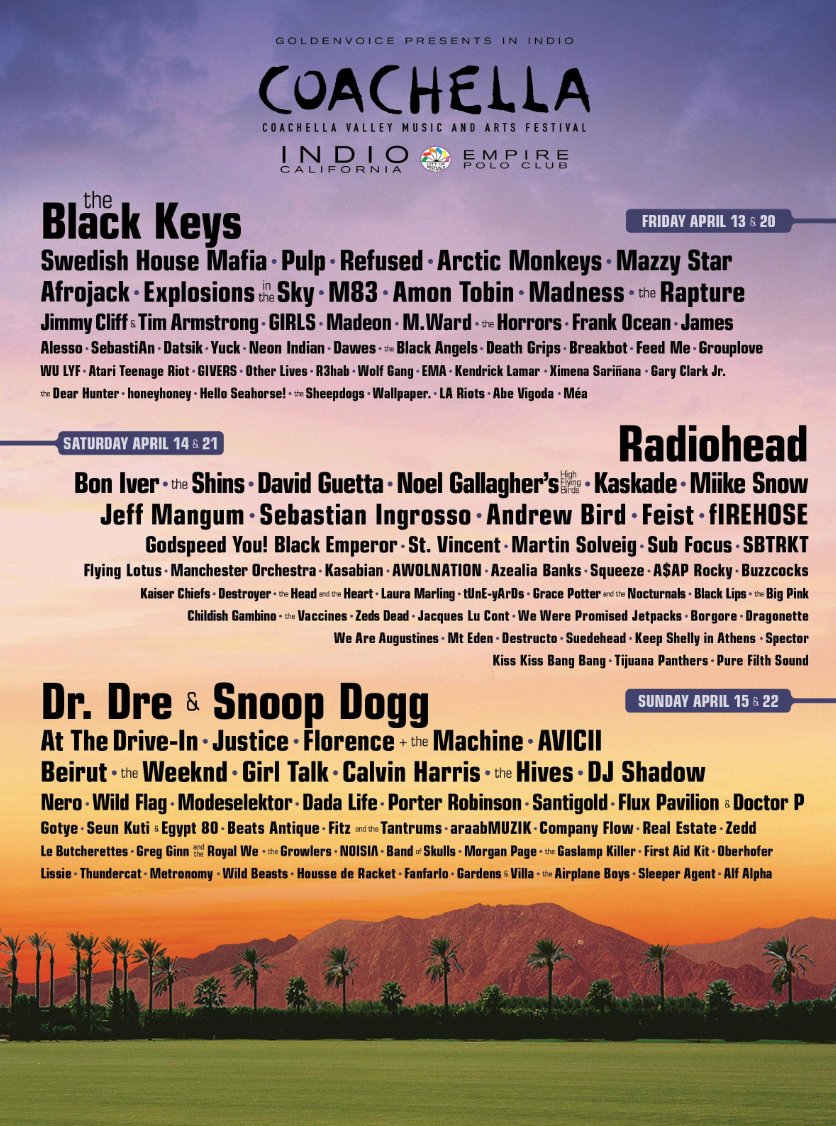
Also in 2012: Dr. Dre and Snoop Dogg brought Tupac Shakur back. A 3D projection of the dead rapper appeared on stage during their headlining set. The clip was on every website within hours. Coachella had its first genuinely viral moment — and a decade of conversation about digital resurrection began.

The Tupac hologram moment was the first time the internet and the festival felt like the same thing.

— 2012, the year Coachella went viral
2014

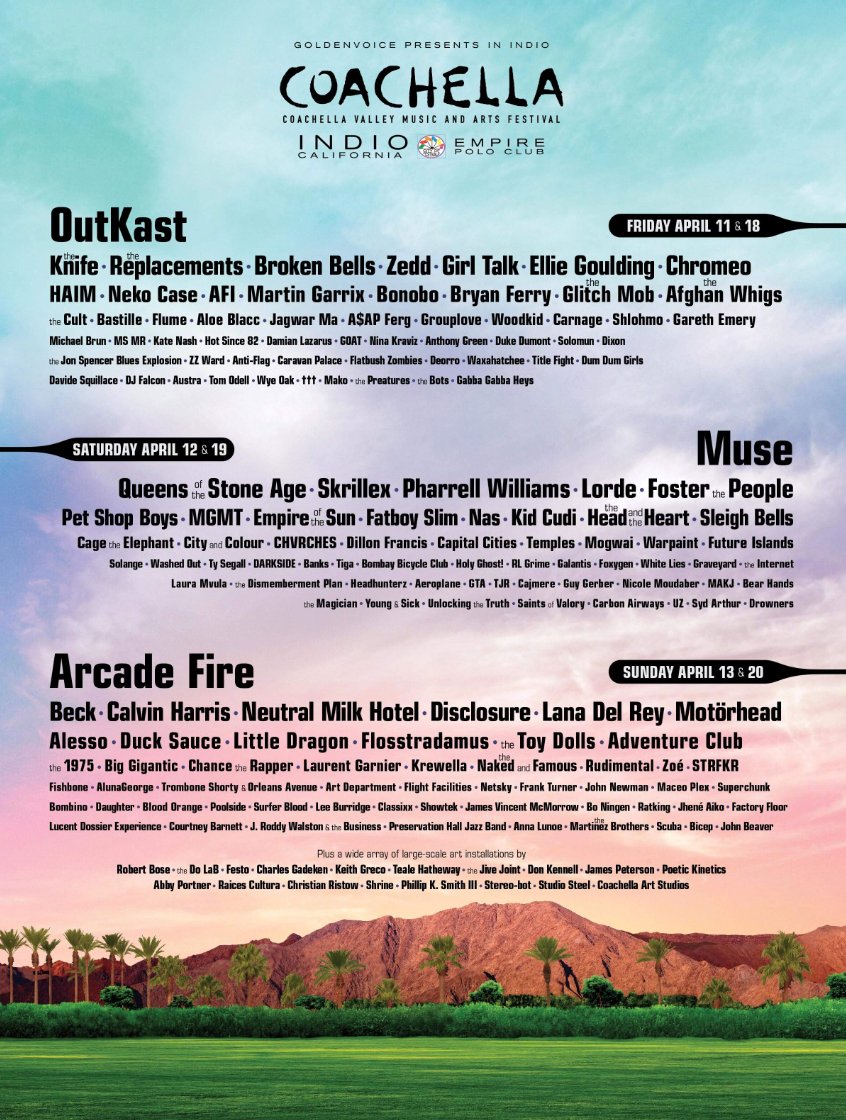
Arcade Fire closed the festival on Sunday. It was, in retrospect, the last great indie coronation at Coachella. After that, the center of gravity shifted permanently toward pop, hip-hop, and electronic headliners. The booking list became the music industry's most-watched document.
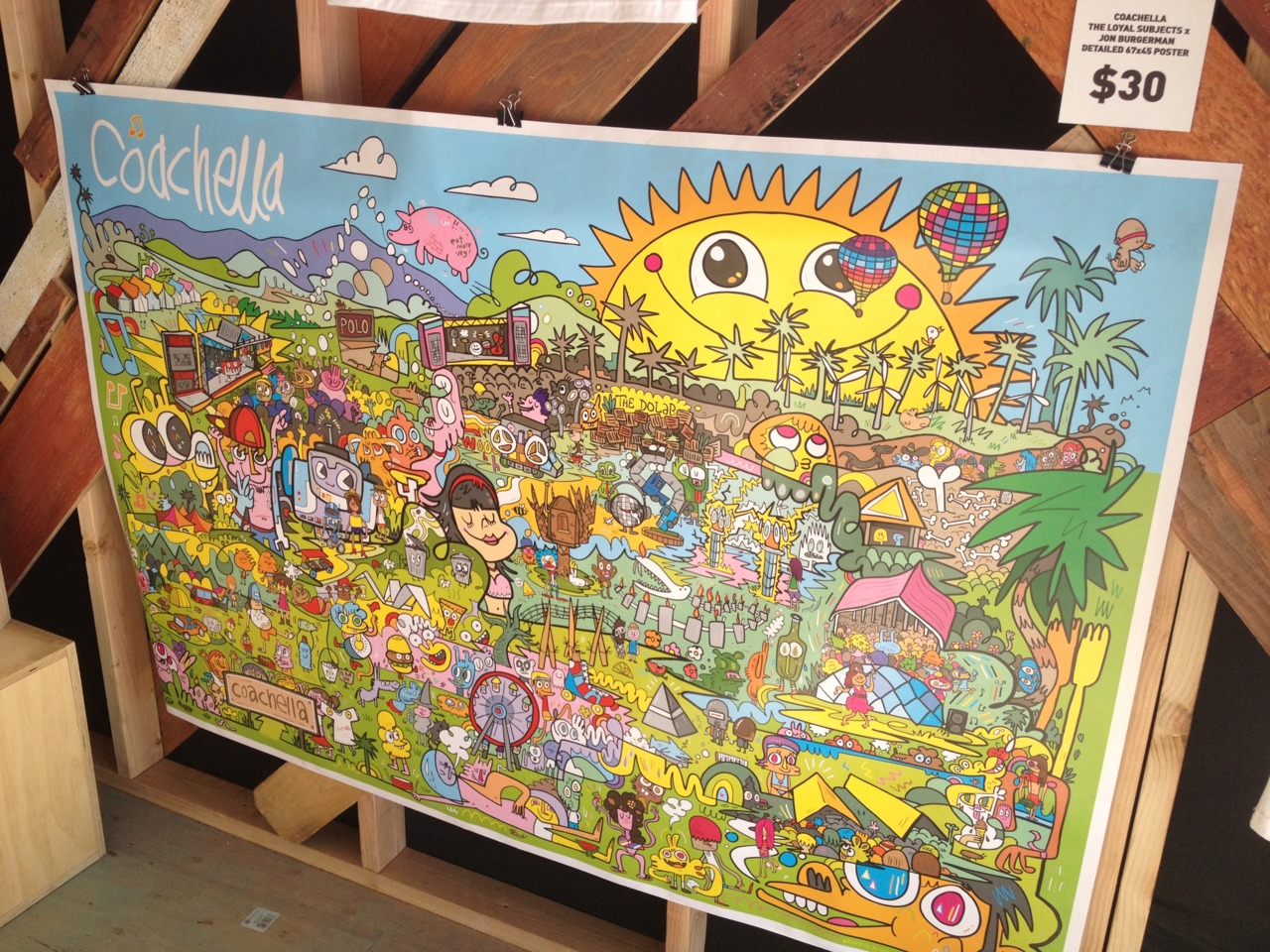
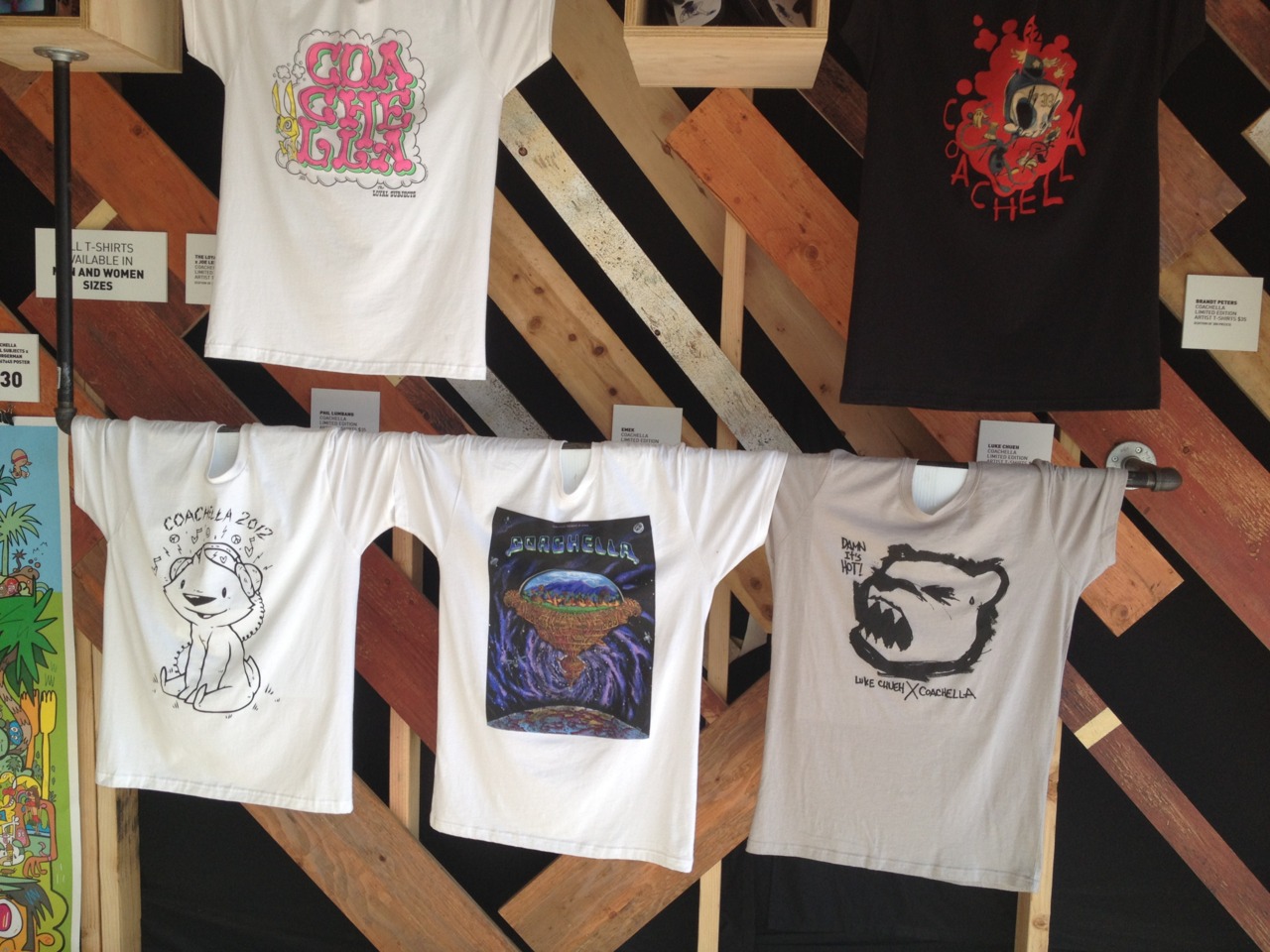
Coachella merch store 2012 — limited edition artist tees on display against chevron wood panels Jon Burgerman illustrated Coachella map poster — everything that happens, all at once
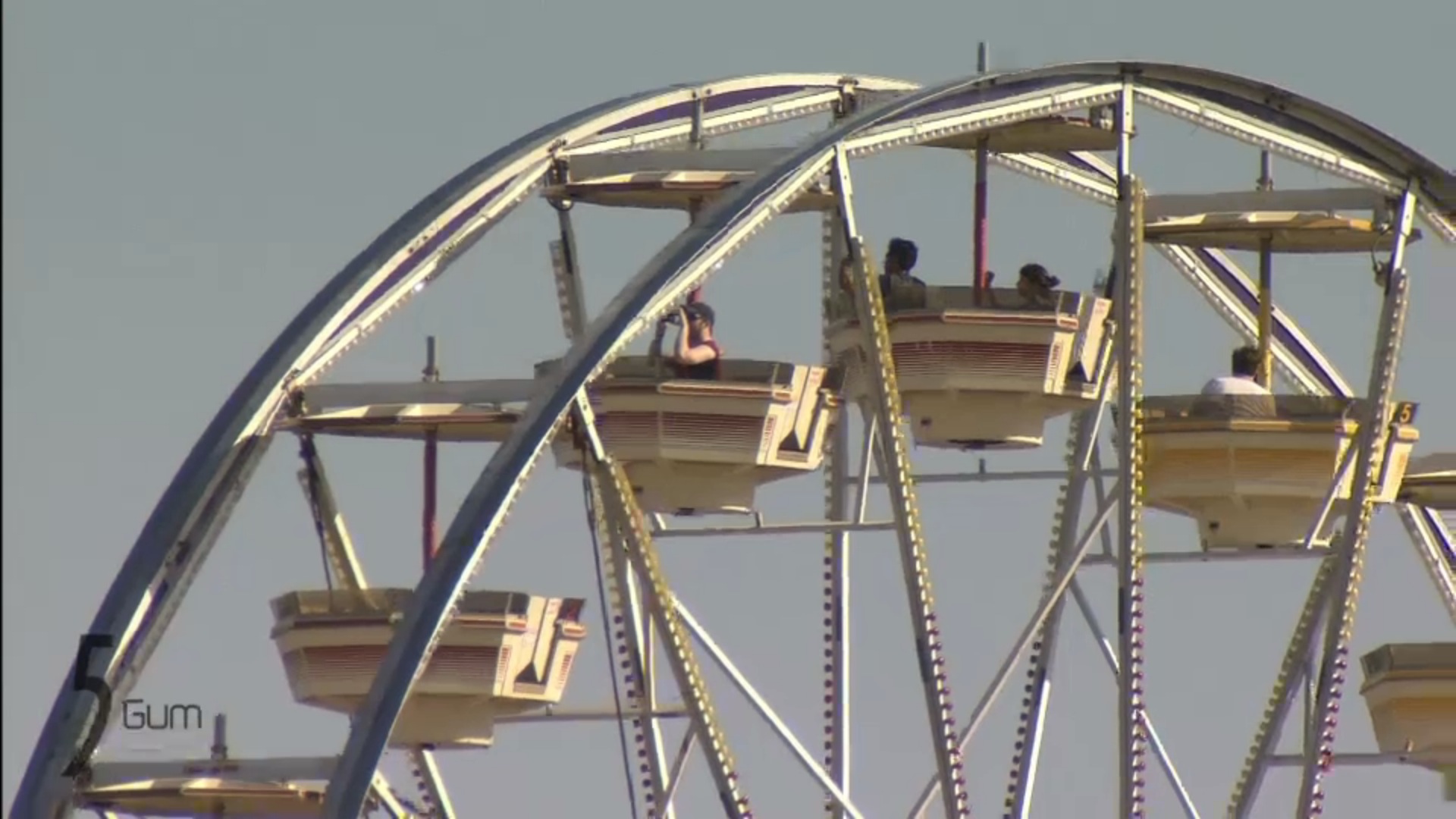
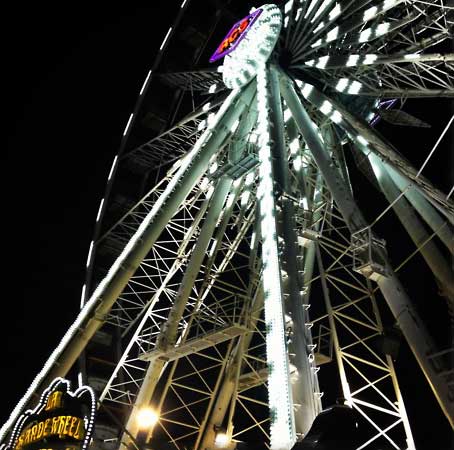
(Left) The merchandise and the mythology · Coachella as commerce, Coachella as cartoon (Right) Le Grande Wheel
Chapter Four 2015 – 2019

The Instagram Era

It is hard to pinpoint exactly when Coachella became a fashion event. The flower crown era crept up gradually — celebrity attendees photographed in bohemian looks, the images spreading far beyond music media into gossip pages and style blogs. By the mid-2010s, "Coachella style" was a searchable trend on Google two weeks before the music even started.

Revolve launched its own off-site festival. Brands sent influencers. The audience became as photographed as the performers. The Ferris wheel, the desert light, the palm silhouettes — the grounds themselves were a set, and everyone on them knew it.

2017

Kendrick Lamar became the first solo hip-hop artist to headline Coachella. His performance — dense, political, musically impeccable — was a reminder that the music could still be the point. His set is still cited as one of the all-time great Coachella performances.

2018

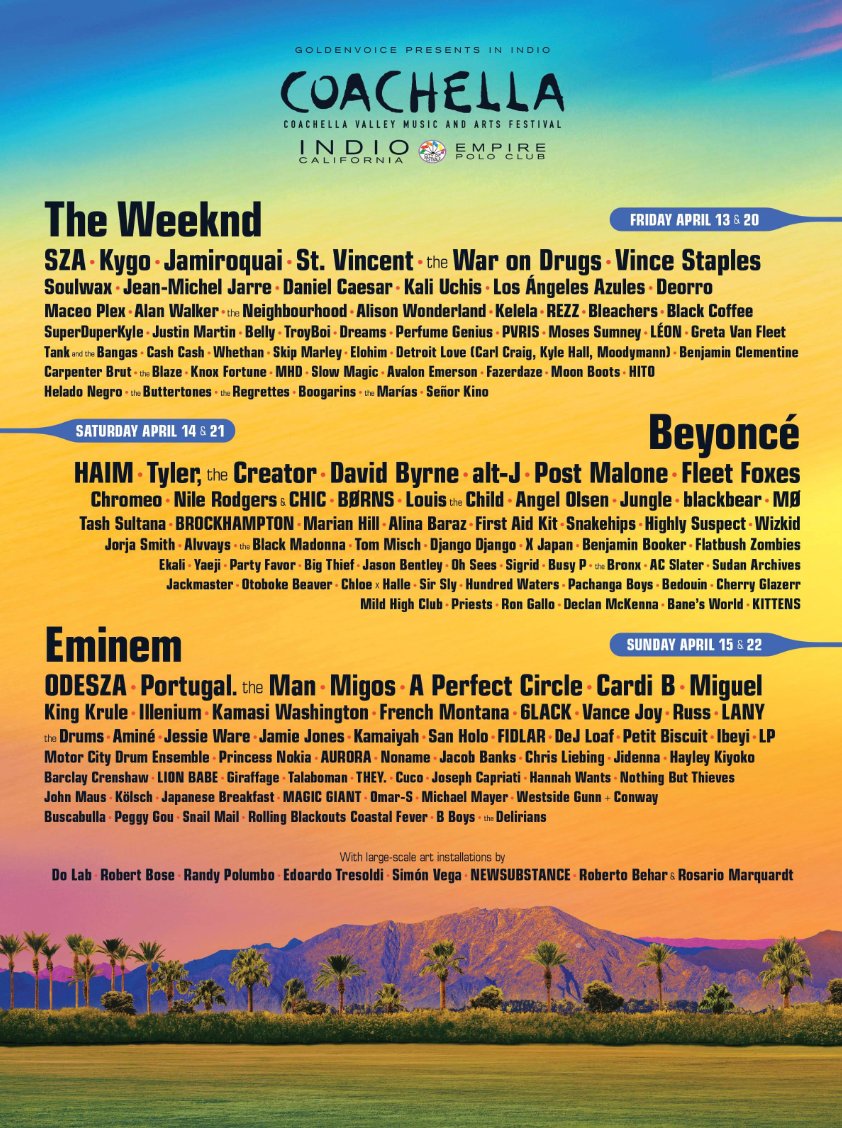
Beyoncé delivered two hours of HBCU pageantry, marching bands, and precision choreography that redefined what a festival headliner could do. Netflix paid sixty million dollars to document it. The internet renamed the festival "Beychella" and the name stuck. No performance since has matched it for sheer cultural weight.

Beyoncé didn't just headline Coachella. She made the festival part of her argument.

— Beychella, 2018
2019

Ariana Grande became the youngest solo headliner in Coachella history. The show was massive. The crowd at the main stage was among the largest ever recorded there. Then, almost immediately, the world changed.

The Coachella Ferris wheel lit against a black night sky — red and gold tents glowing below, crowds silhouetted
The Grande Wheel. · Coachella's most photographed landmark
Chapter Five 2020 – Present

The Return

Coachella 2020 was cancelled in March, two weeks before it was supposed to begin. Then 2021 was cancelled too. For the first time in twenty years, April came and went without a festival in Indio. The silence was its own cultural moment — a measure of how embedded the thing had become.

2022

The comeback was exactly what it needed to be: enormous, emotional, slightly overwhelming. Billie Eilish became the youngest solo headliner in Coachella history. The Weeknd stepped in when Kanye West withdrew. Swedish House Mafia closed the Sahara Tent on Sunday night. The festival sold out before most people knew ticket sales had opened.

2023

Bad Bunny headlined — the first Latin artist to do so — performing almost entirely in Spanish to the largest crowds the main stage had ever seen. Frank Ocean's long-anticipated headline set became one of the most-discussed non-performances in festival history when he appeared drastically late and visibly off-form at Weekend 1, then skipped Weekend 2 entirely due to injury. The discourse was enormous. It was peak Coachella: the conversation around the event as significant as the event itself.

2025

Lady Gaga ended a years-long absence from live performance with a headline set that was equal parts concert and theatrical production. It was covered as news. The return to Coachella remained, as it always had been, the most visible stage in live music.

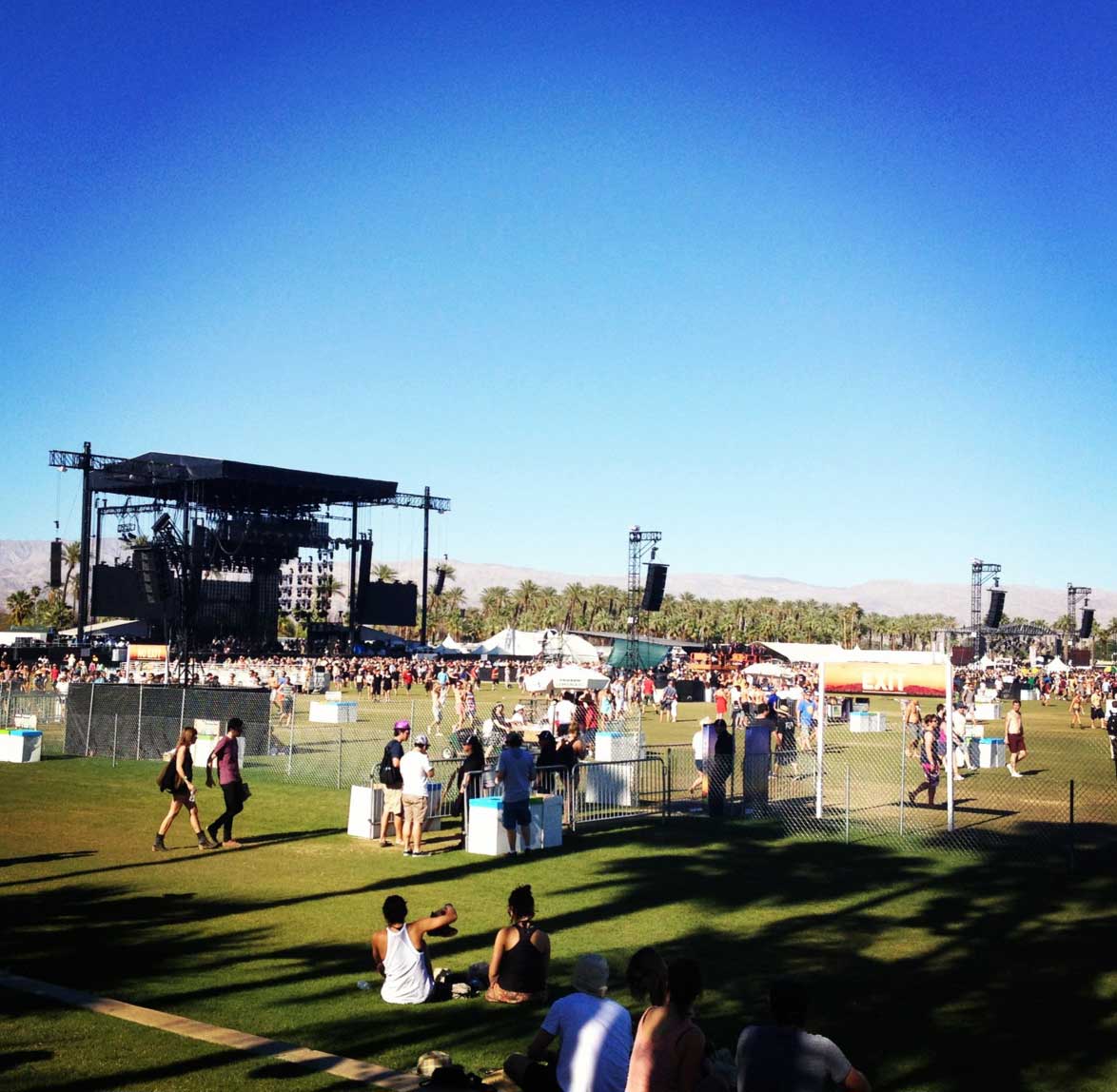
The Coachella main stage from the hill — desert mountains in the distance, palm trees, clear blue sky
Shade in the VIP. Totally worth the extra cost.

I want to create something that people will never forget.

— Beyoncé · Homecoming · Netflix · 2019
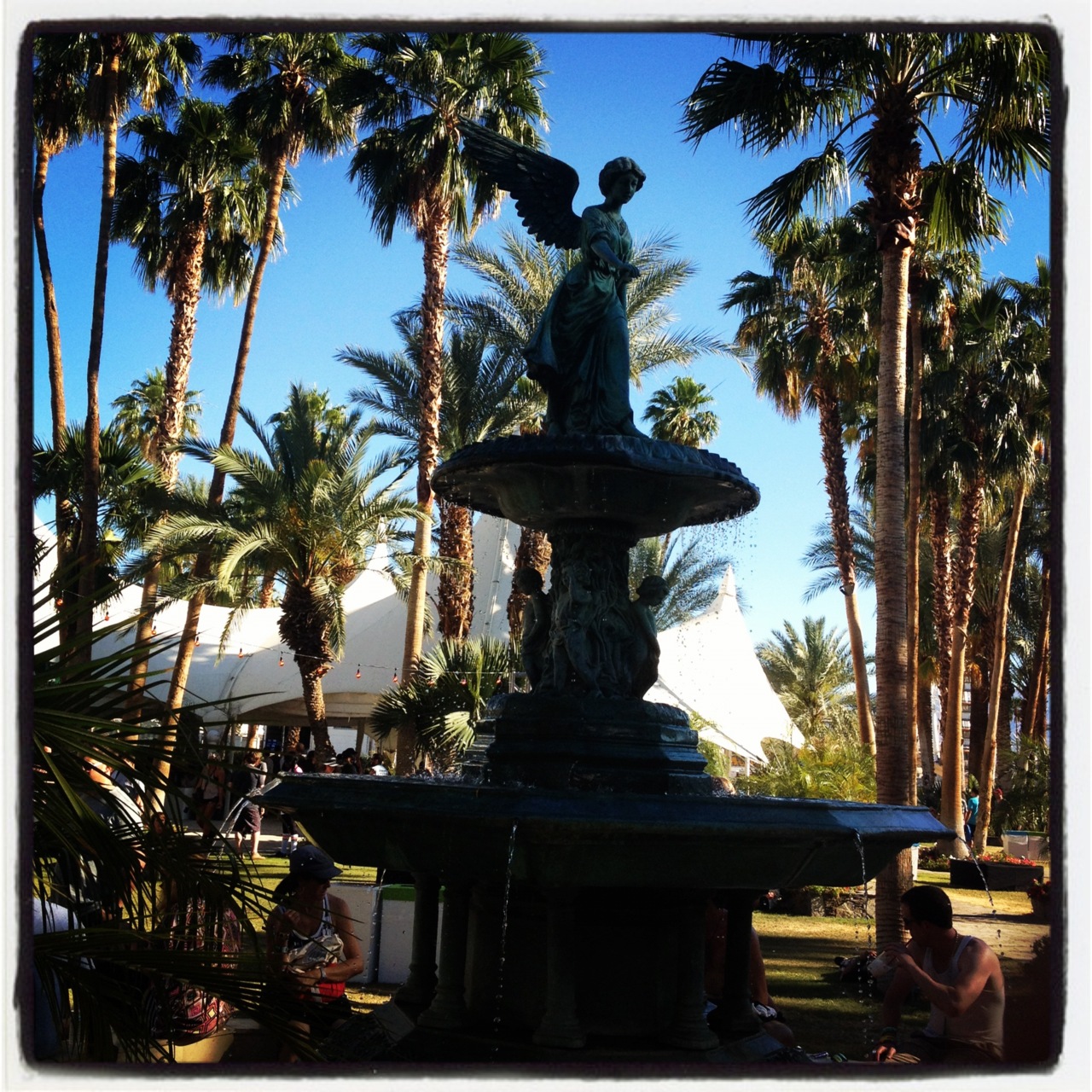
The angel fountain at the Empire Polo Club — festivalgoers resting beneath palms, the fountain at center
Custom special edition tees.
Coachella Valley Music and Arts Festival · Goldenvoice Presents · Empire Polo Club · Indio, California
Every Artist.
1999 – 2025.
2401 acts · 25 years · one desert

Tap every artist you recognise.

0  recognised — keep going, it gets worse.
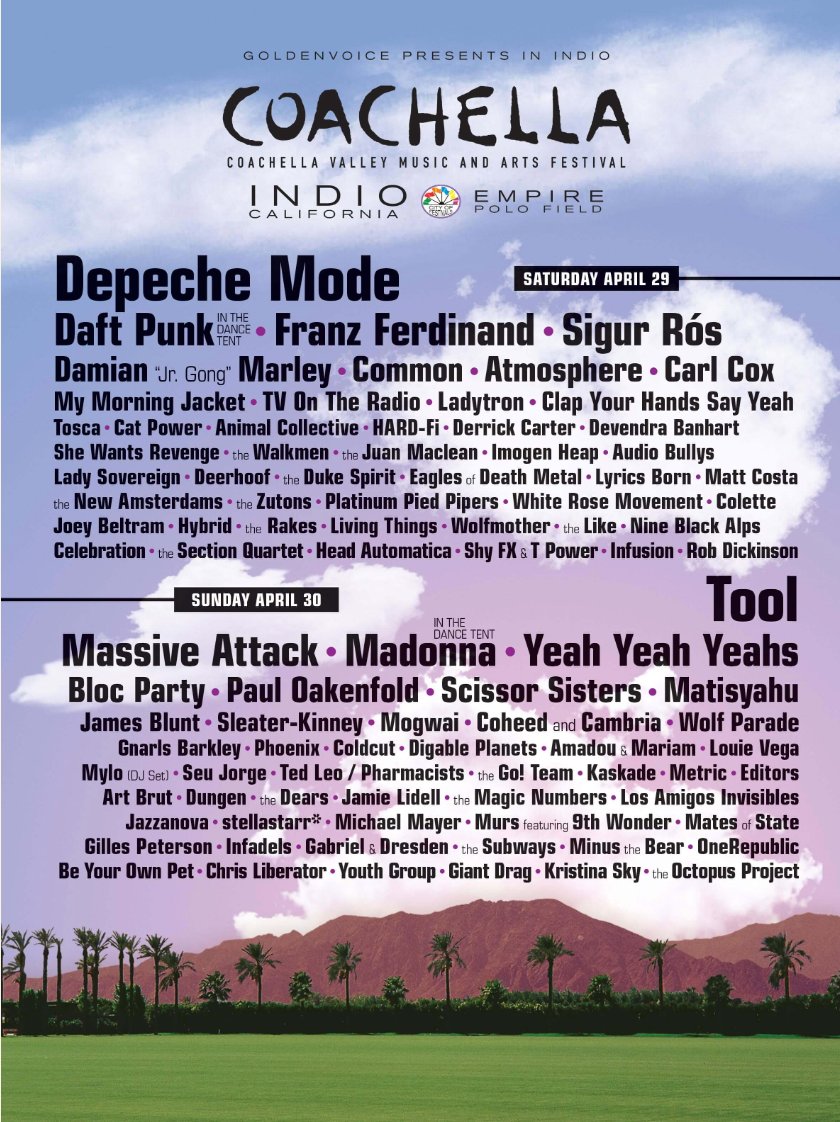
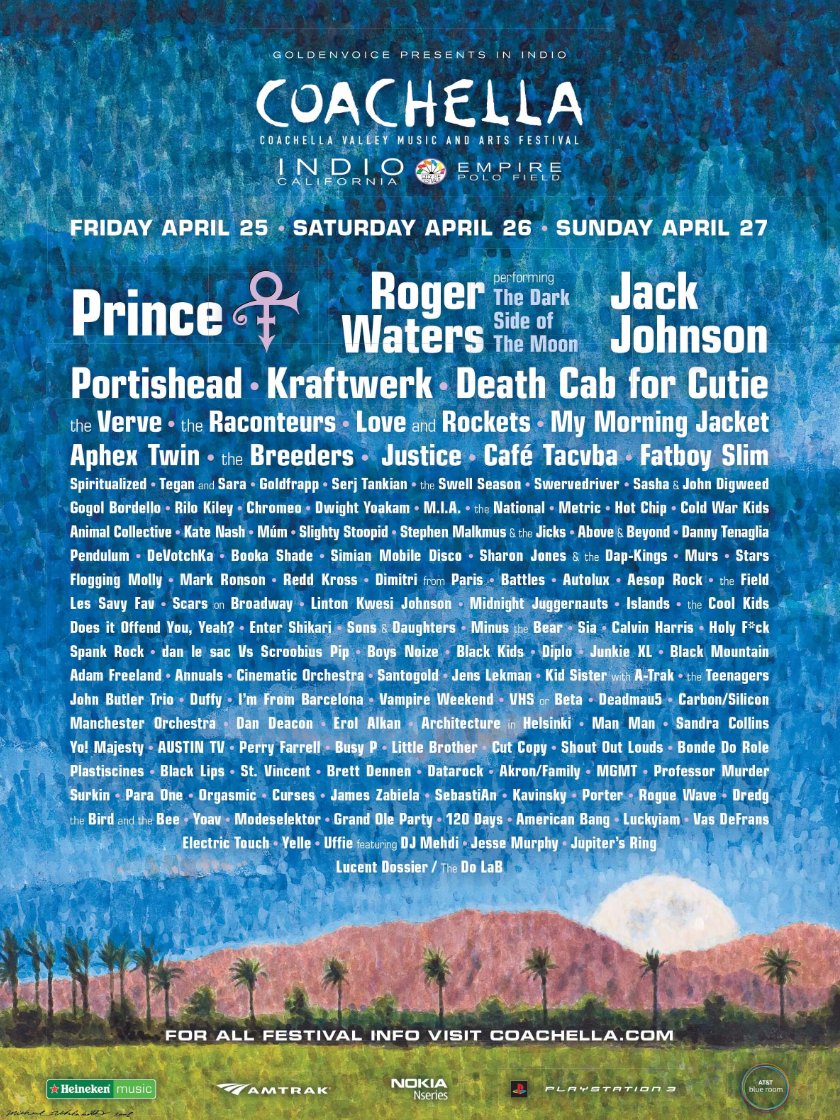
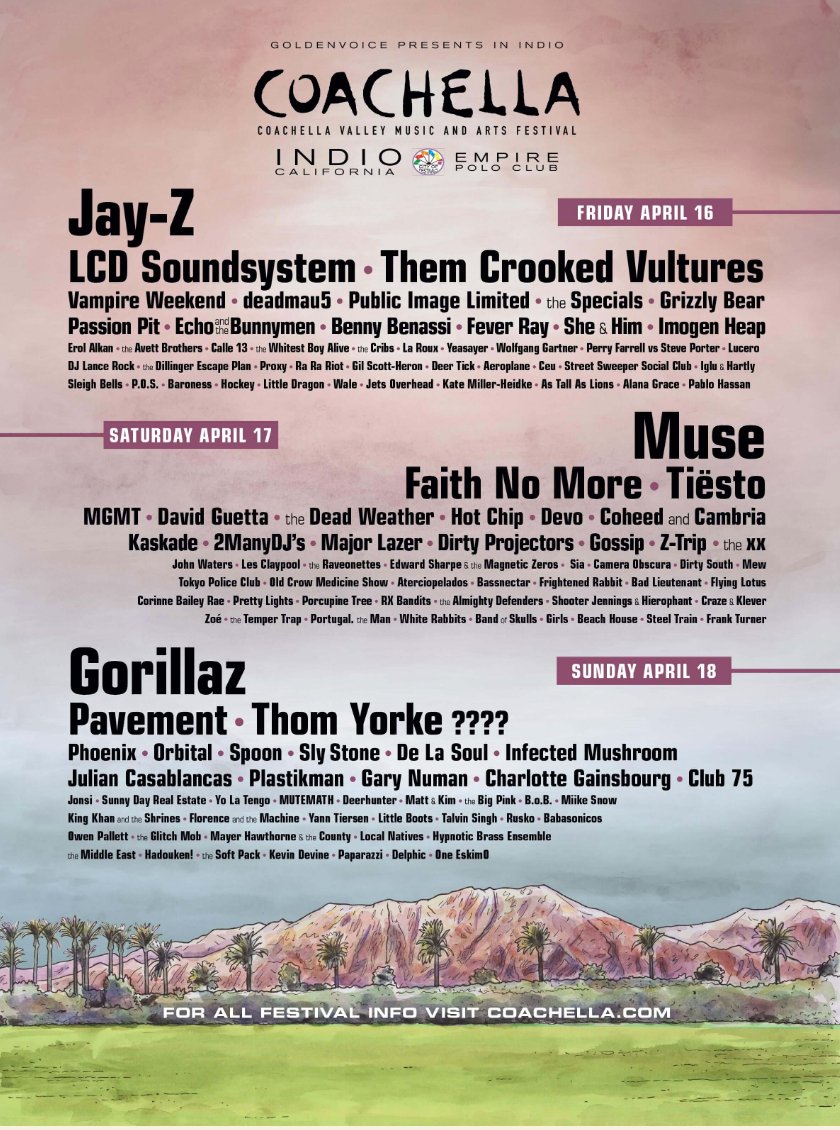
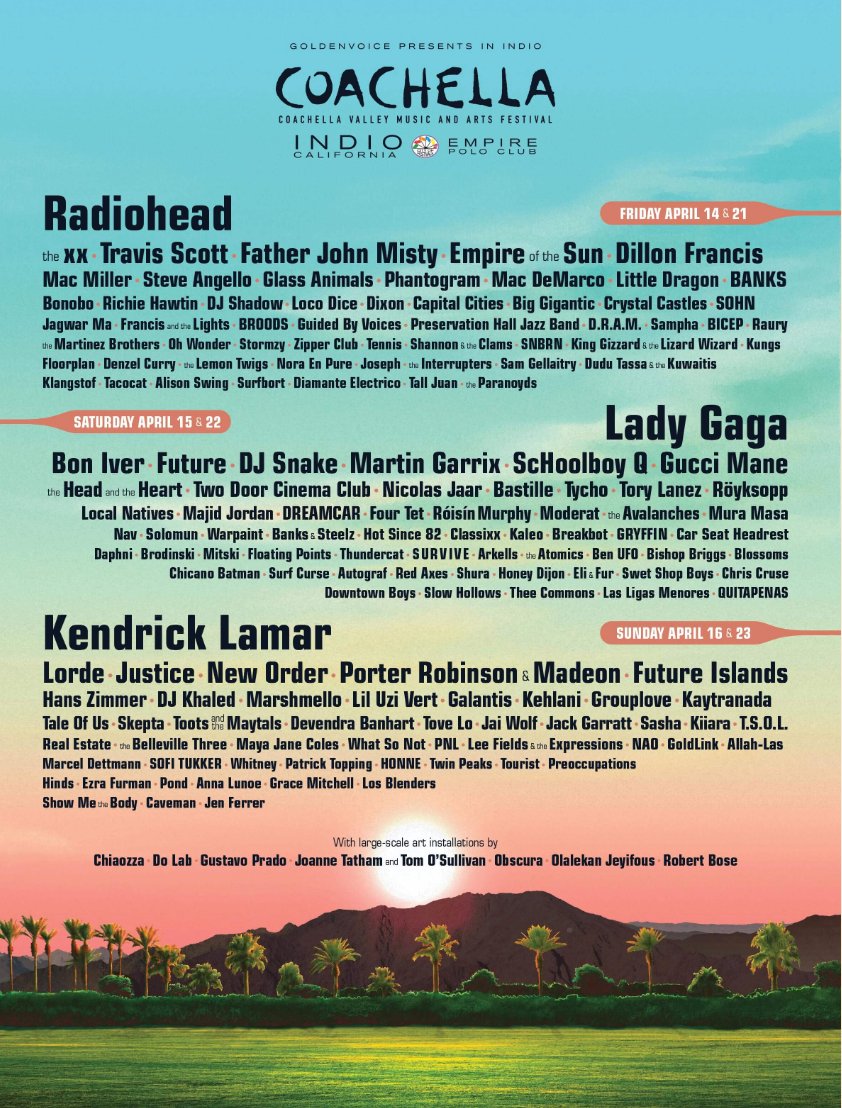
View All Official Lineup Posters (1999 – Present) →

A (Brief) History of Coachella

This guide covers the origins, evolution, and cultural impact of the Coachella Valley Music and Arts Festival from 1993 to the present. It is an independent editorial work — not affiliated with, endorsed by, or sponsored by Goldenvoice, AEG, or the Coachella festival. All official poster artwork remains the property of Goldenvoice. Photographs in this guide were taken at the festival by independent photographers.

A (Brief) History of Everything_ · Guide 011